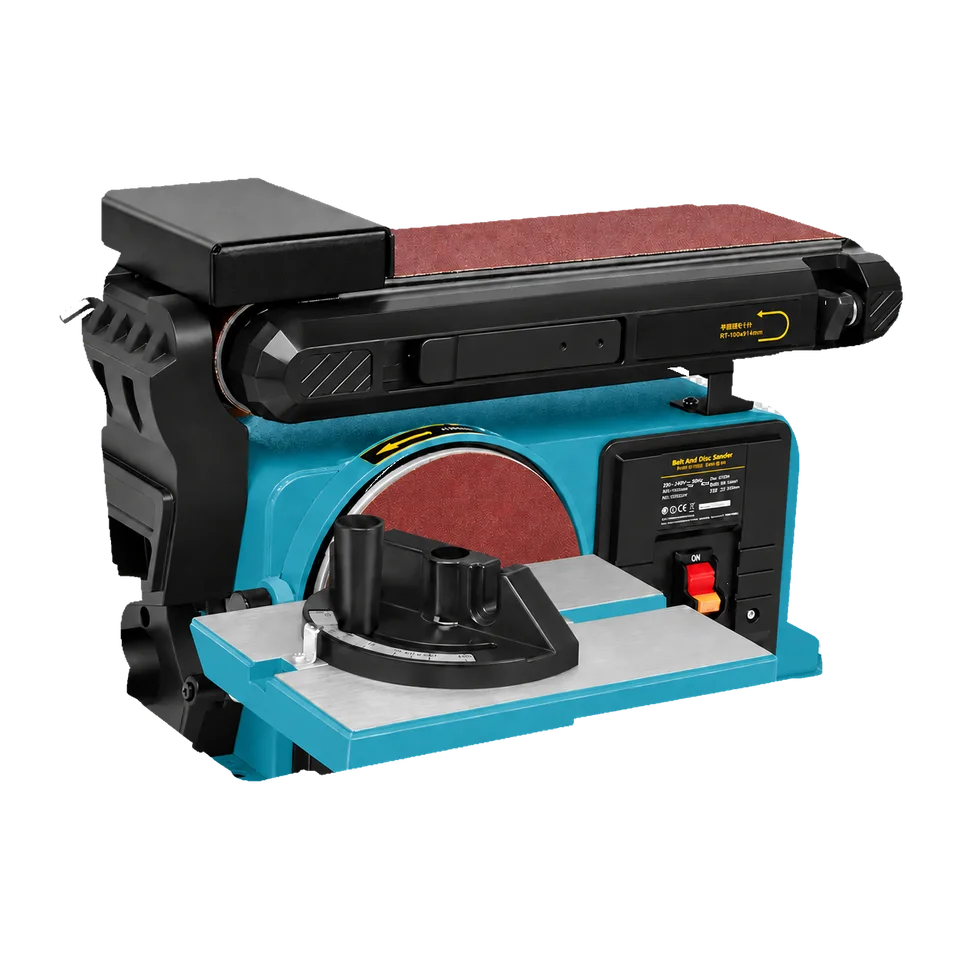
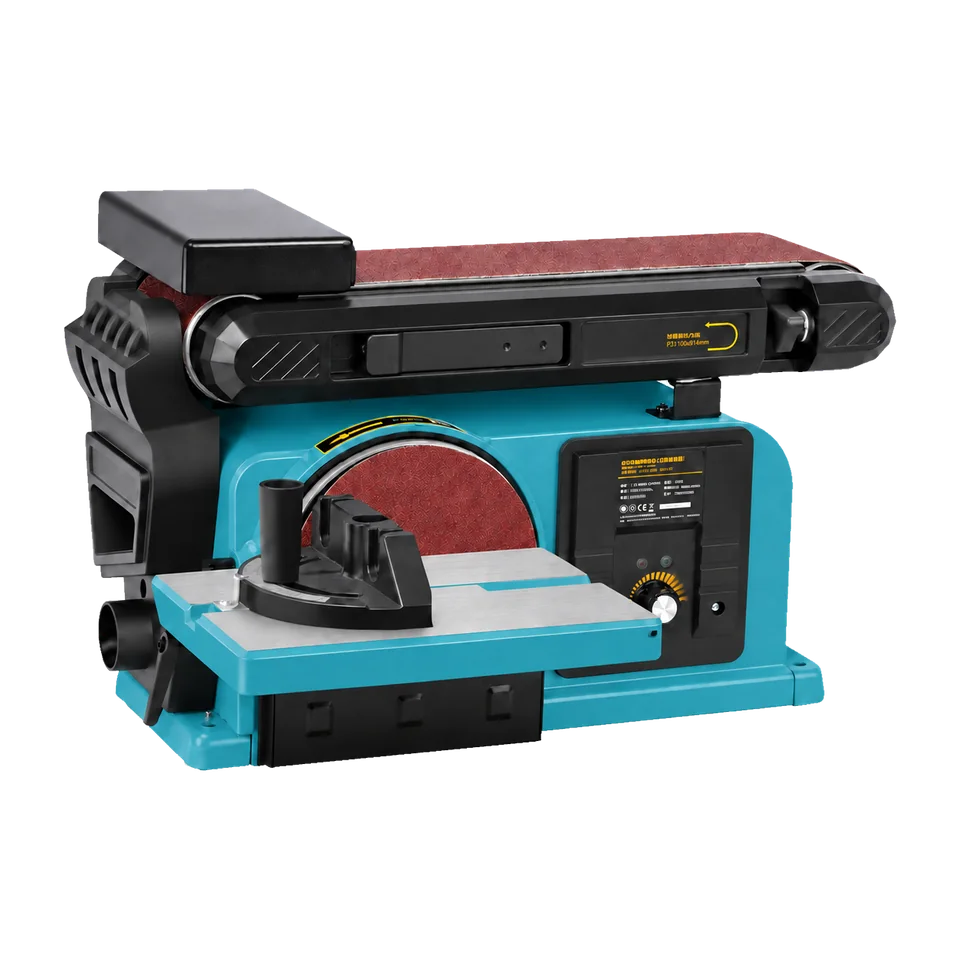
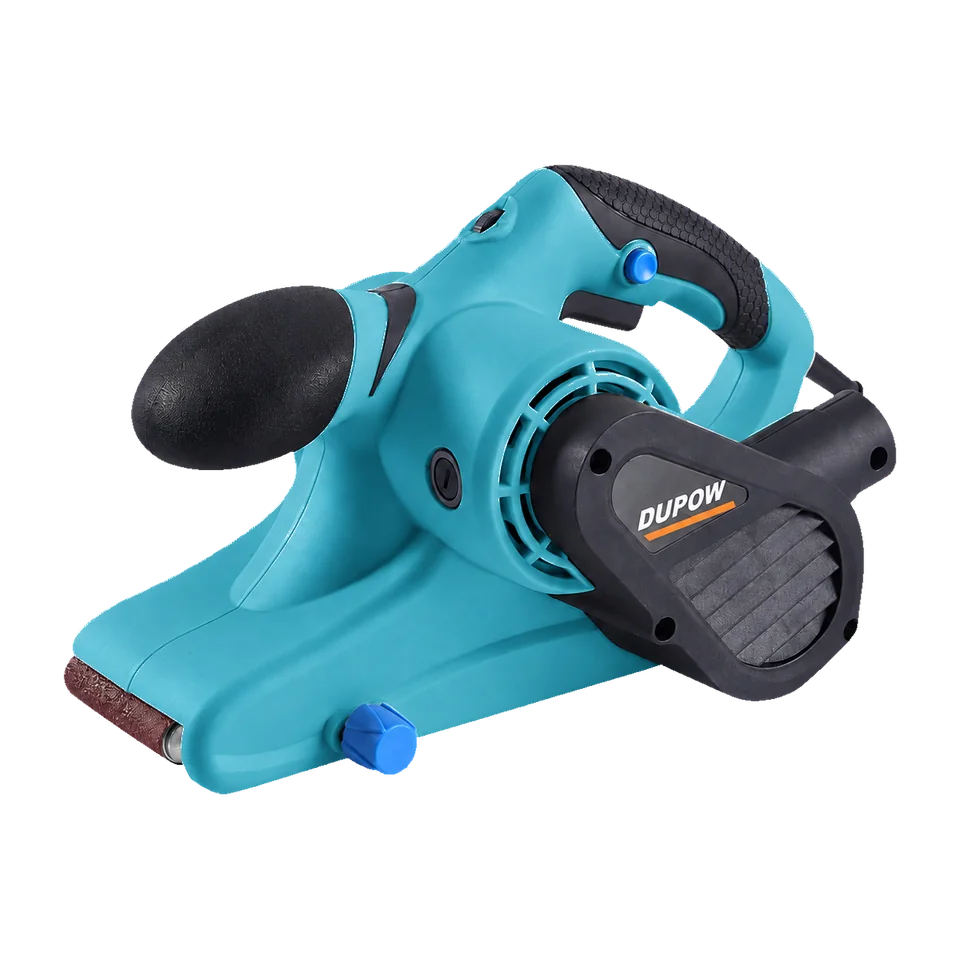
Use a benchtop belt-and-disc position for bringing smaller workpieces to a fixed station. Use a handheld belt-sander position for working along a larger fixed surface. Compare the abrasive formats and support geometry alongside the power specification.
| Model | Format and abrasives | Catalogue working details |
|---|---|---|
| DUP-BDS-001 | Bench; 100 × 914 mm belt, 150 mm disc | 8 m/s belt; 0–45° table tilt |
| DUP-BDS-002 | Bench; 100 × 914 mm belt, 150 mm disc | 7.5 m/s belt; 0–45° table tilt |
| DUP-BS-003 | Handheld; 76 × 533 mm belt | 200–400 m/min belt |
Match the station to the workpiece
For a benchtop offer, ask for usable table dimensions, support and any guide or stop supplied. Establish which workpiece dimensions and angles the approval sample should handle. For a handheld offer, define the working area and where the material can be supported. Keep belt speed and disc speed separate and put both bench belt values into the same units if the buyer wants a numerical comparison.
Plan the accessories at the same time
Give the buyer separate reorder lines for the bench belt, bench disc and handheld belt. Check the attachment and required grit by sample. Ask for a drawing or photo of the extraction connection and record any included adapter, mounting items and work support in the quotation.
Buyer FAQs
Do the two benchtop models take an identical abrasive SKU?
They list the same dimensions. Confirm the belt and disc attachment specification before merging a purchasing code.
What else should I compare beyond the stated table angle?
Check table support, useful workpiece space, angle-setting repeatability and the components shipped with the machine.
Read the related guide on How to source a private-label power tool manufacturer and build a coherent range or request a model-specific quotation with the configuration you need.