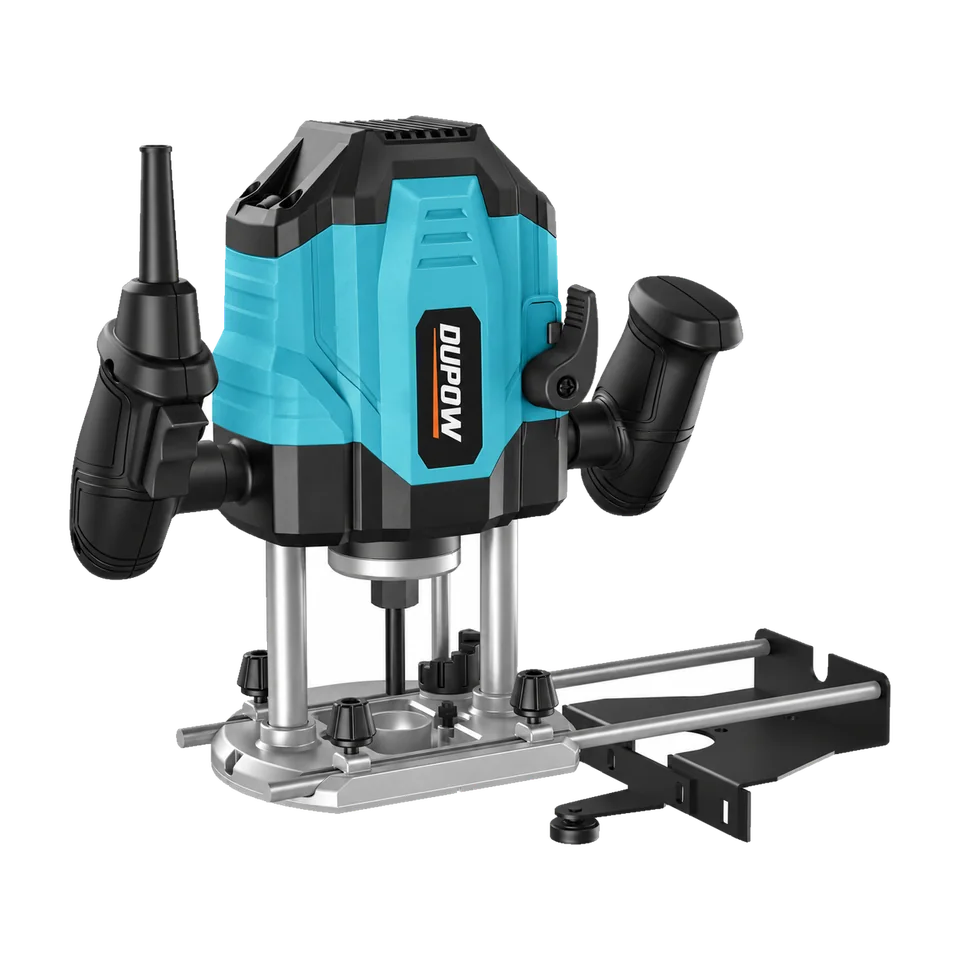
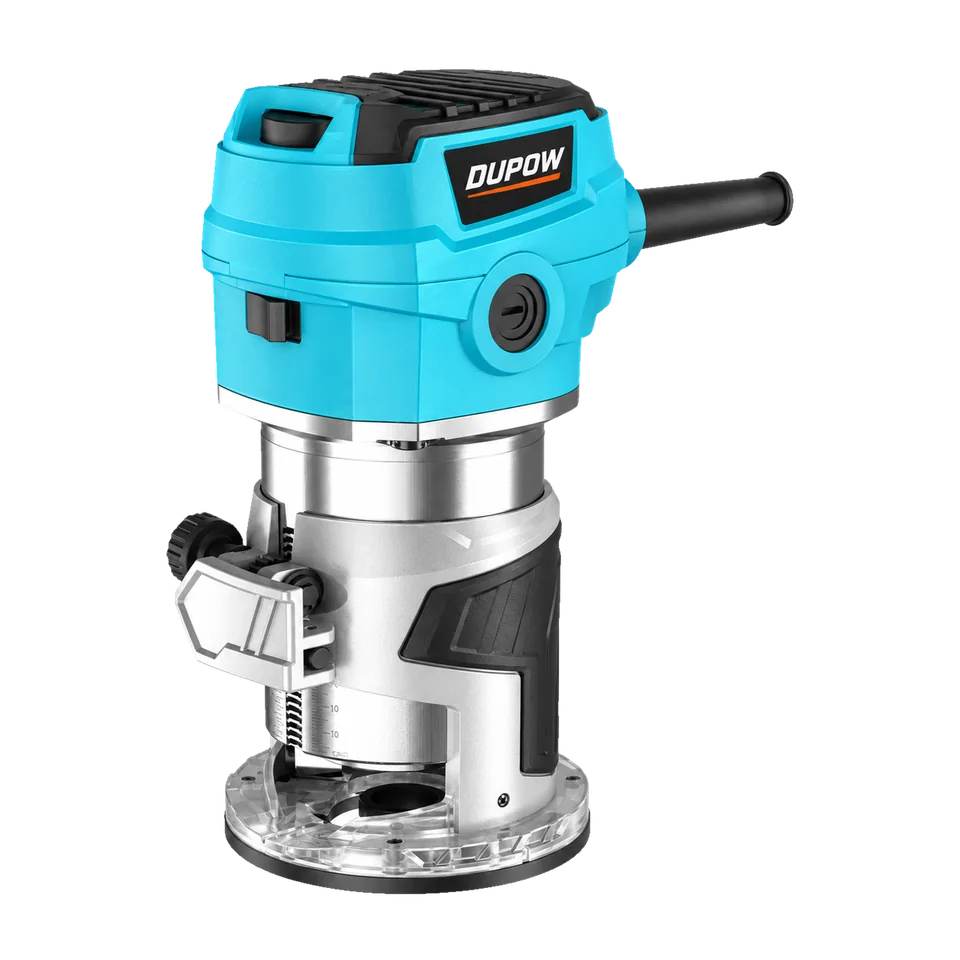
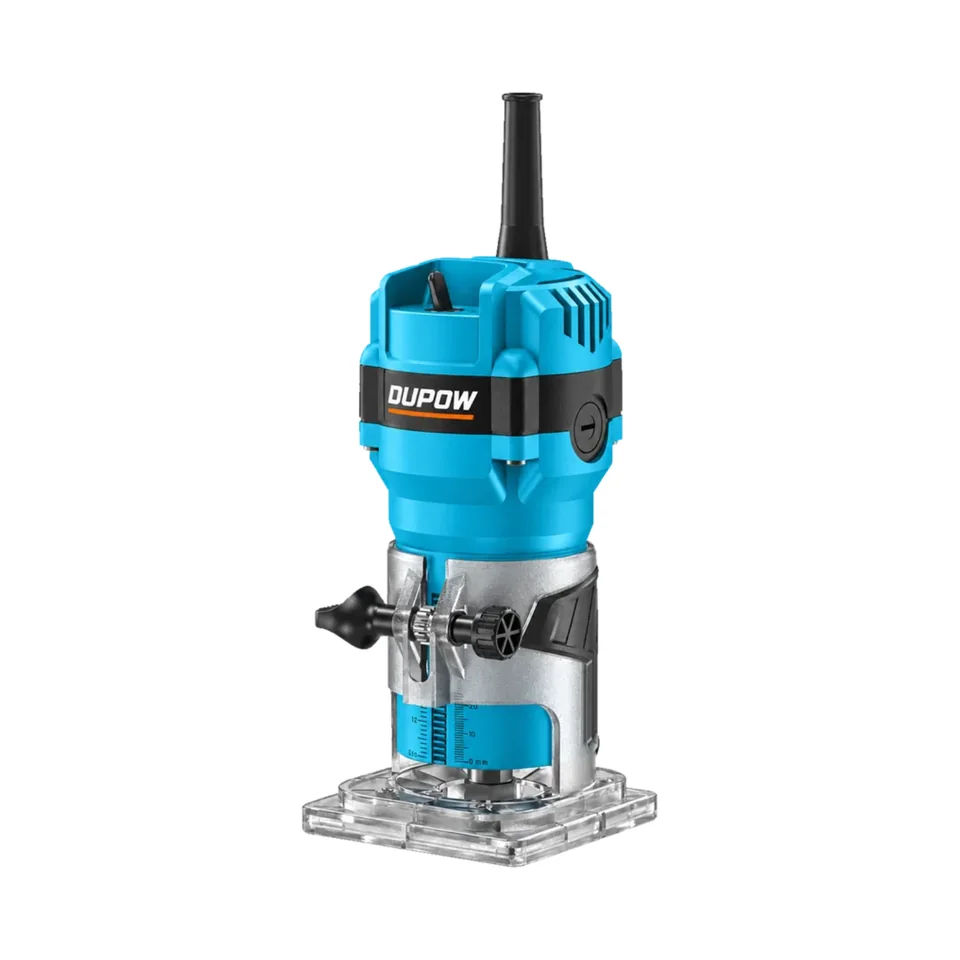
Specify a plunge router for a range that needs controlled entry depth on a face. For guided trimming and edge work, shortlist a compact router and match the base and collet to the tooling your buyer stocks. Both formats still need a precise guide and accessory list.
| Model | Format and collet | Depth or speed entry |
|---|---|---|
| DUP-RT-001 | Plunge; 8 mm | 55 mm plunge depth with scale and lock; 10,000–28,000 rpm |
| DUP-RT-002 | Compact; 6 mm or 1/4 in by market | 12,000–30,000 rpm |
| DUP-RT-003 | Compact; 6 mm or 1/4 in by market | 30,000 rpm listed no-load |
Separate the base from the motor
Ask for the base model, guide attachment, extraction adapter and bit clearance on the order line. RT-001 lists a vacuum adapter and parallel and circle guides. For a compact router, show which base is fitted and which optional bases, if any, are included in the quotation. Makita’s plunge-base product page is a manufacturer example of a separately identified base accessory. Assess fit using the approved drawing or sample for your ordered model.
Approve one operation per assortment position
For a plunge position, record how the depth stop is set and reset on the buyer’s representative workpiece. For an edge position, agree the guide and bit geometry and check whether the sample remains easy to guide on the intended material. Record exact part codes for the collet, spanner and guides for replacement orders.
Buyer FAQs
Can I treat 6 mm and 1/4 inch as the same option?
Keep separate order entries. Match the actual collet and bit shank specified for that market.
Does plunge travel establish maximum cutter capacity?
Use separate fields for travel, cutter dimensions and any limits stated for the base and bit.
Read the related guide on How to source a private-label power tool manufacturer and build a coherent range or request a model-specific quotation with the configuration you need.