For a private-label order, compare the exact sanding pad, orbit, speed range and dust kit before comparing prices. The DUPOW ROS-002, ROS-003 and ROS-004 have the same listed 125 mm pad, 2 mm orbit and 7,000–13,000 rpm no-load speed range. Their visible housings and dust collectors differ, so specify the model and supplied collector on each quotation.
Start with the work and the disc
Describe the surface, desired finish and abrasives the channel expects to sell. A 125 mm pad determines the nominal disc diameter. It does not identify the attachment or hole pattern. Ask for a photo or drawing of the selected pad, the matching disc reference and the supplied sanding paper. If you sell consumables separately, check the disc on the approval sample.
Bosch's sanding guide explains how a round sanding plate is used on flat surfaces and contours. Use that distinction to describe the work in the brief. Check the exact model, abrasive and workpiece combination on the sample rather than promising a finish based on the tool category.
Compare the three listed configurations
The listed configurations are all 300 W, 230–240 V/50 Hz. Specify the version you need for the destination market. Orbit diameter and no-load speed belong in separate fields; these entries do not rank the models by stock removal, finish or collection efficiency.
| Model | Listed pad, orbit and no-load speed | Pictured collector | What to itemize |
|---|---|---|---|
| DUP-ROS-002 | 125 mm; 2 mm; 7,000–13,000 rpm | Rounded opaque rear collector | Listed dust bag and one sanding paper; identify the collector actually supplied |
| DUP-ROS-003 | 125 mm; 2 mm; 7,000–13,000 rpm | Cylindrical dust container | Listed dust bag and one sanding paper; quote the optional dust box separately |
| DUP-ROS-004 | 125 mm; 2 mm; 7,000–13,000 rpm | Rectangular translucent dust box | Listed dust bag and one sanding paper; quote the optional dust box separately |
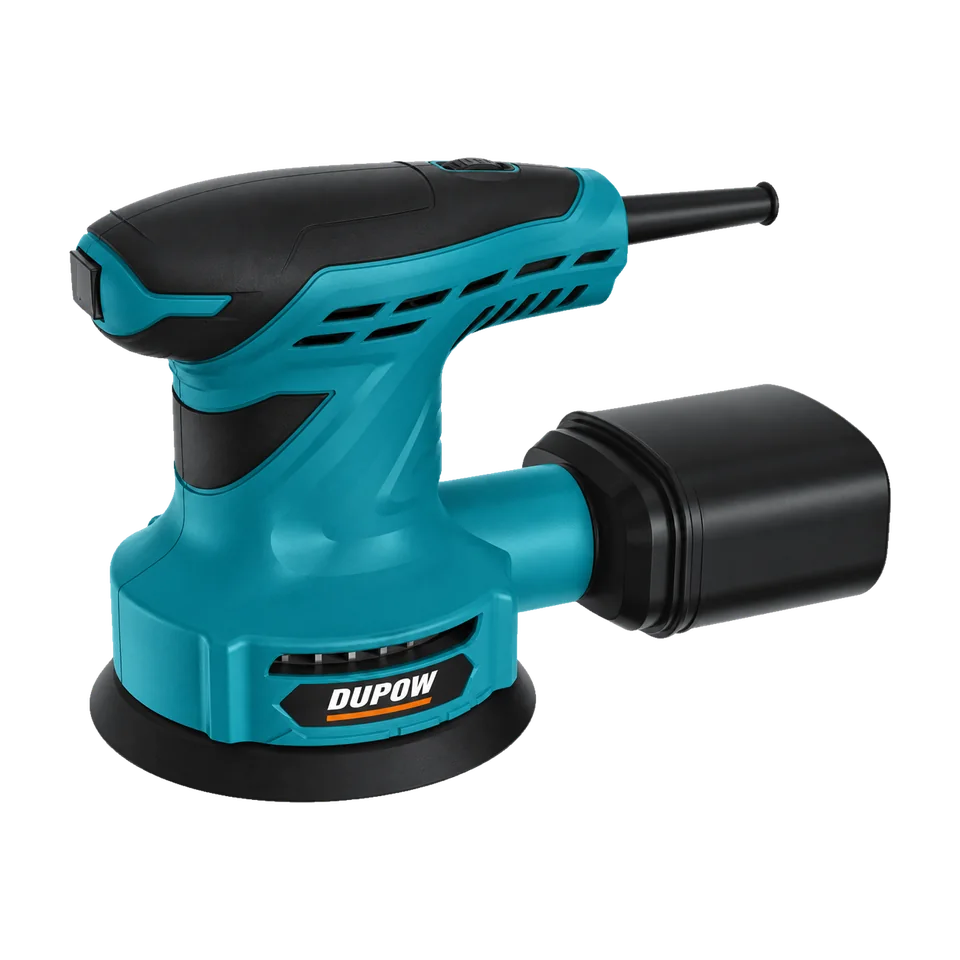
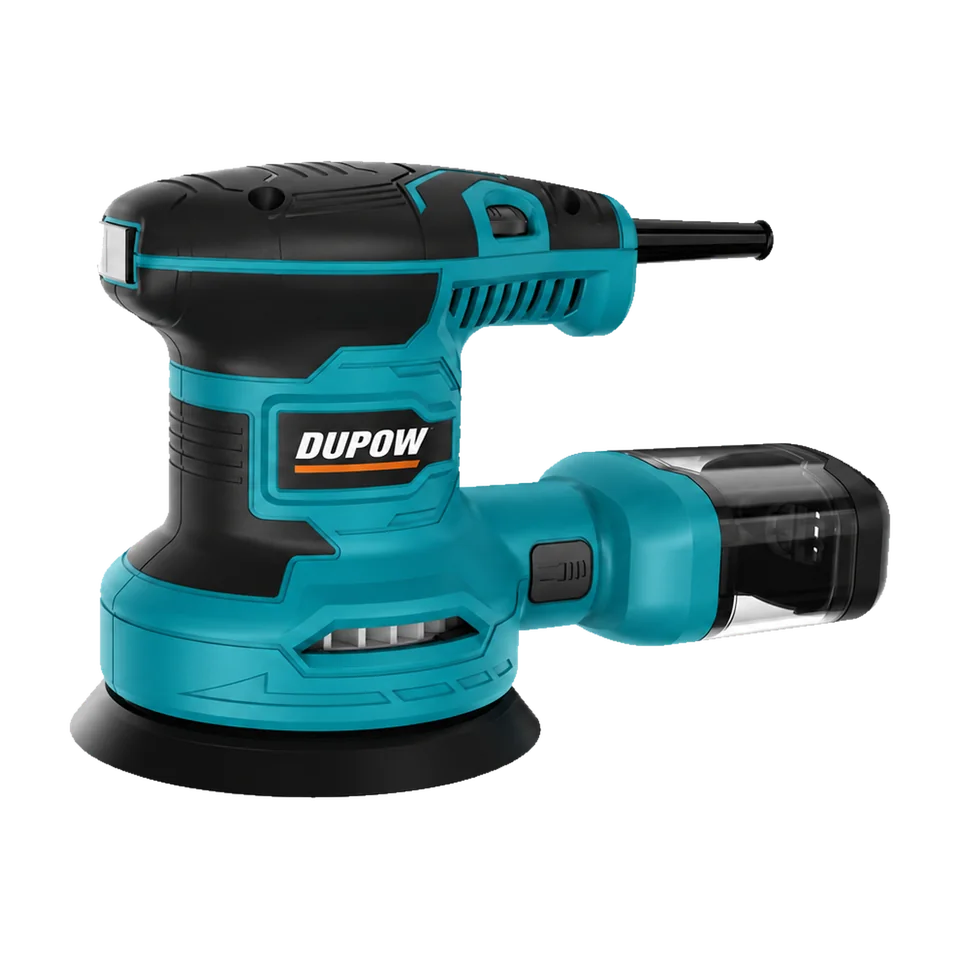
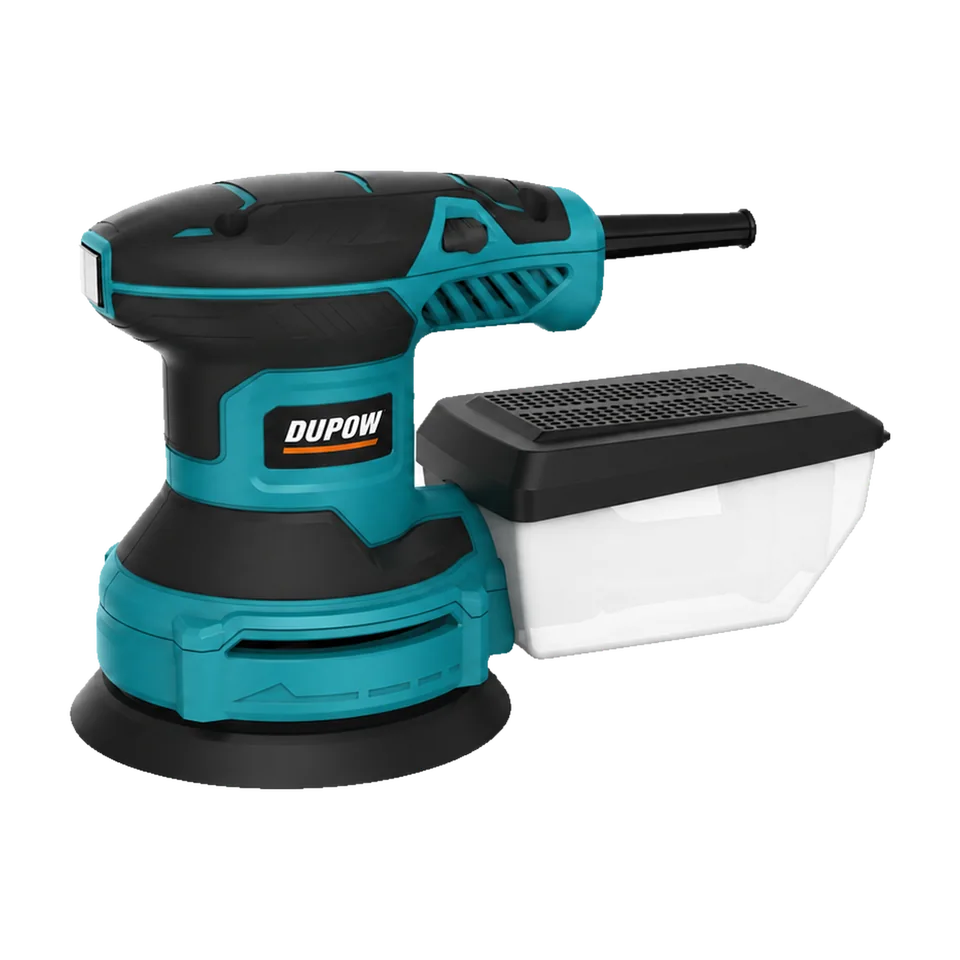
Turn the dust system into order lines
For the supplied bag or box, request a part reference, connector detail, quantity and photo. If the buyer also needs external extraction, ask for the port dimensions and the exact adapter to include. A pictured collector establishes its appearance, while the approved contents list establishes what ships.
During sample review, check that the collector fits, can be removed for emptying and stays attached under the intended use. Record the collector, abrasive and workpiece used in the check. Use the same reference when approving a replacement collector or optional kit.
Set one approval record for the private-label SKU
Record the exact model and destination version, pad and disc reference, collector and optional adapter, cord and plug, quantities, branding and artwork revision. Match the packaging illustration to the actual included kit. The private-label range guide covers the wider assortment and branding decisions.
Keep the two commercial options separate if you want a bag-only kit and a kit with an optional box. That makes the quote, approved sample and retail contents comparable without relying on a picture to settle the difference.
Buyer FAQs
Do these three models list different orbit diameters?
Each of these three listed configurations has a 2 mm orbit and a 125 mm pad. Check the exact configuration on the quotation and approved sample.
Does the pictured box come in the standard kit?
The pages list a dust bag and one sanding paper. ROS-003 and ROS-004 identify a dust box as optional; confirm the actual collector on the order line for every model.
Can I specify any 125 mm disc?
Specify the disc attachment, hole pattern and abrasive as well as the diameter. Confirm the intended consumable against the selected pad.
Compare the random orbital sander range or request a model-specific quotation with your desired collector and abrasive kit.