Compare generators on the declared rated output for the proposed voltage, frequency and phase. Keep maximum output as a separate entry, and review the intended running and starting loads without assuming the maximum figure is a continuous operating allowance.
A purchase-ready decision sheet
| Decision field | Purchasing record |
|---|---|
| Generator version | Exact model, alternator winding, voltage, frequency, phase and outlet configuration. |
| Running requirement | Equipment list and declared running demand, with the relevant units and operating pattern. |
| Starting requirement | Equipment that starts under load, its documented starting demand and the intended starting sequence. |
| Evidence to retain | Manufacturer rating conditions, load-review result, approved sample/version and the accepted order specification. |
Keep the load worksheet separate from the catalogue headline
For DUP-GG-012, the output pairs below distinguish the listed copper and aluminium versions. Do not combine the rated output from one winding with the maximum output from the other. Phase and power-factor choices also belong to the selected version rather than to an unspecified model name.
A useful buyer worksheet records each connected item, its running requirement, its starting information and which items operate together. Have the proposed generator configuration reviewed against that worksheet. A numerical difference between maximum and rated output does not, by itself, prove a particular motor can start.
Keep the relevant CPSC carbon-monoxide information and EPA small-engine guidance with a U. S.-market review; neither source certifies a DUPOW engine or generator.
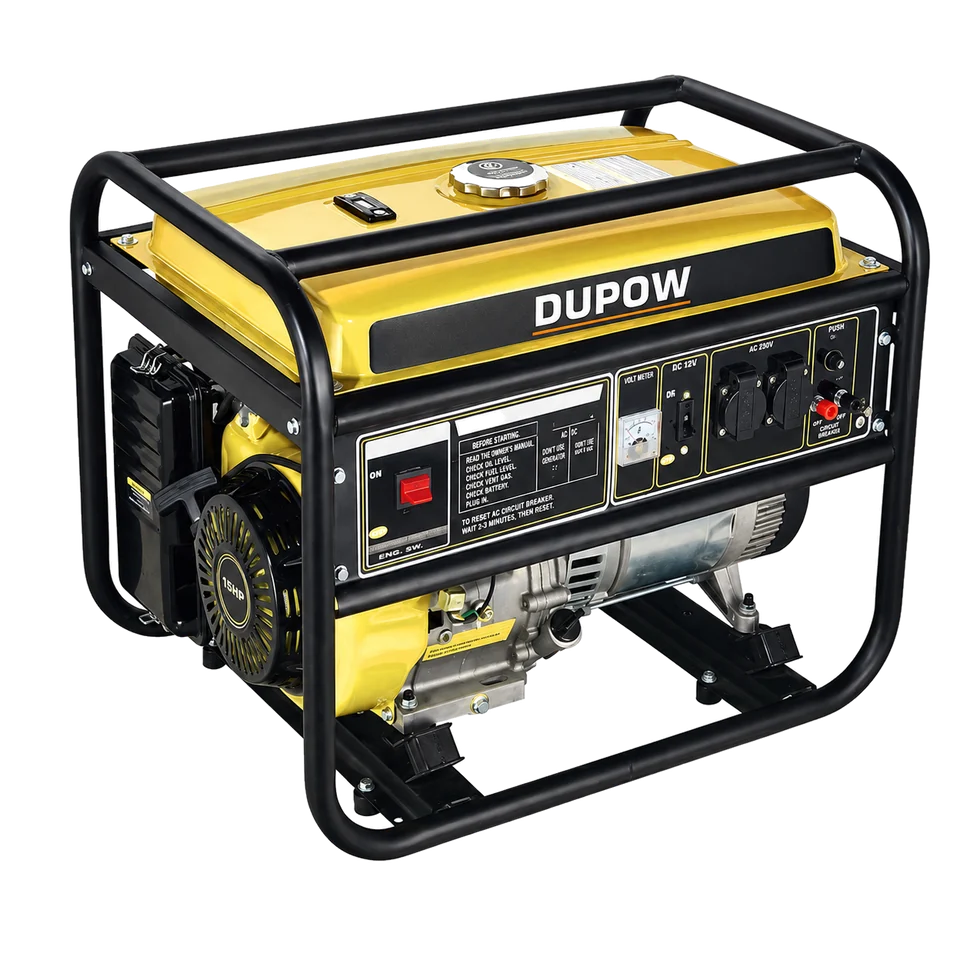
What rated output means for selection
Rated output is the power level identified for normal operation under the manufacturer’s specified conditions. Maximum output is generally a limited capability rather than a continuous operating target. Buyers should ask for both values, their units and the conditions behind them.
A model example: keep each output pair together
DUP-GG-012 lists copper and aluminium alternator options. Its 5.5–7.0 kVA rated-output range describes different listed versions, not one unit with an adjustable rating.
| Alternator winding | Rated output | Maximum output |
|---|---|---|
| Copper | 7.0 kVA | 7.5 kVA |
| Aluminium | 5.5 kVA | 6.0 kVA |
Compare the copper version on its 7.0 kVA rated value and the aluminium version on its 5.5 kVA rated value. Choose your available voltage, frequency, phase and outlet pairing in the quotation; the table does not establish every possible combination. Neither maximum-output figure establishes a motor-starting allowance or a run-time guarantee.
Keep kVA and kW distinct
kVA describes apparent power; kW describes active power. Use kW = kVA × power factor only when the power factor and rating conditions are confirmed for the ordered version. A kVA headline alone does not establish an equivalent kW rating. Request both declared units and the exact phase configuration before comparing quotations.
Account for starting demand
Motors, compressors and some pumps can require higher power during startup than during steady operation. Add the running loads and review the starting demand of the largest relevant device. Do not size a generator by adding label watts without considering how the equipment actually starts and operates.
Choose your complete market configuration
- Rated and maximum output
- Voltage, frequency, phase and outlet arrangement
- Engine displacement, starting method and fuel system
- Alternator and voltage-regulation configuration
- Noise information under stated conditions
- Runtime only when tank size, load and test conditions are defined
- Destination-market emissions, safety, warning and documentation requirements
Do not separate performance from safety
Portable generators create serious carbon-monoxide, electrical and fire hazards. Product selection, labels and manuals must address the destination requirements and safe intended use. U. S. buyers should also confirm applicable small-engine emissions requirements and current certification status for the exact engine family.
How DUPOW presents generator data
DUPOW identifies rated output first on generator product pages where reviewed data is available. Compare models in the gasoline generator range, the inverter generator range and the generator manufacturer-sourcing page.
Buyer FAQs
Can maximum output be used as the normal continuous rating?
Use the declared rated output and its stated conditions for the running-load comparison. Keep the maximum figure and its conditions separate.
Can a kVA value be read as the same kW value?
Only use a conversion with the confirmed power factor and rating conditions for the chosen version. Do not infer those conditions from the model name.
Does the copper/aluminium output table approve every voltage and phase combination?
No. Select the offered winding, voltage, frequency, phase and outlets together and retain the matching ratings in the quotation.
Send DUPOW the model, market, quantity and requirements for this purchase.