Select a wet sharpener by the wheel dimensions, control range and guide system needed for the buyer’s edge tools. Compare the grinding and polishing wheels independently. Then specify water management and the jigs or supports that come with the machine.
| Model | Grinding wheel | Polishing wheel | Speed |
|---|---|---|---|
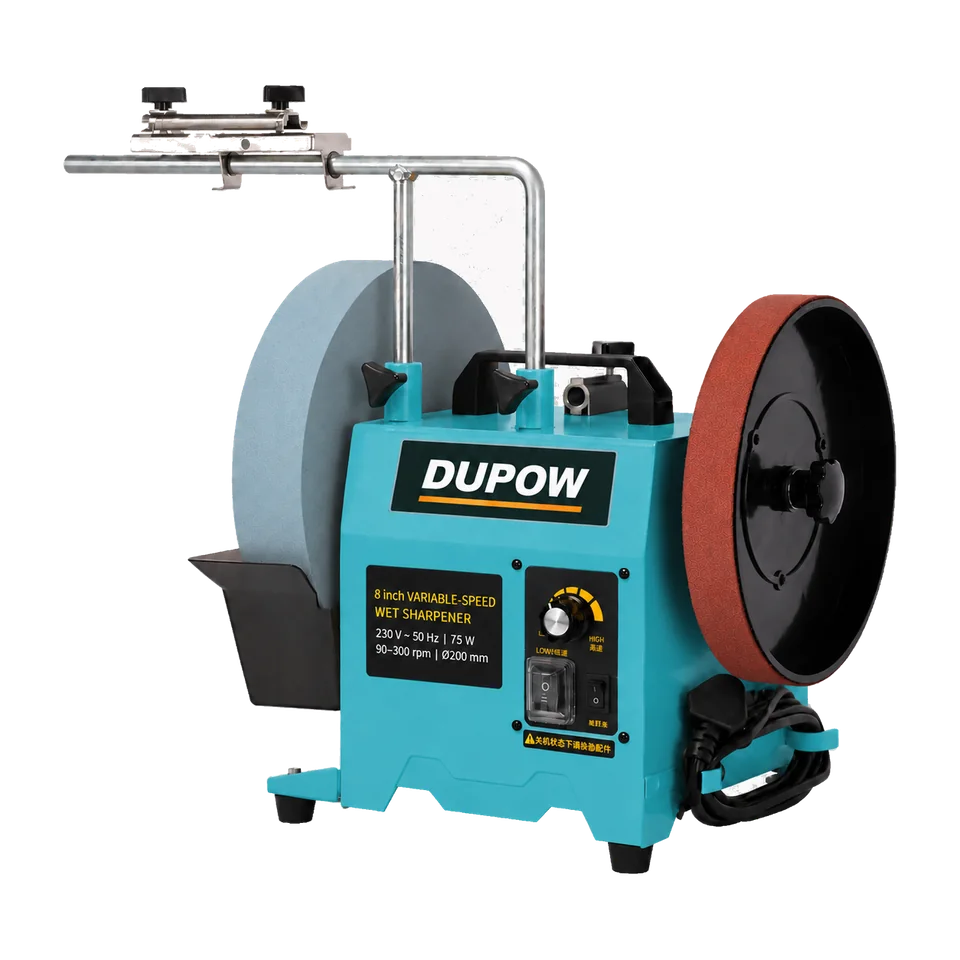
| DUP-WG-001 | 200 mm diameter, 12 mm bore, 40 mm width | 220 mm diameter, 12 mm bore, 32 mm width | 90–300 rpm; stepless |
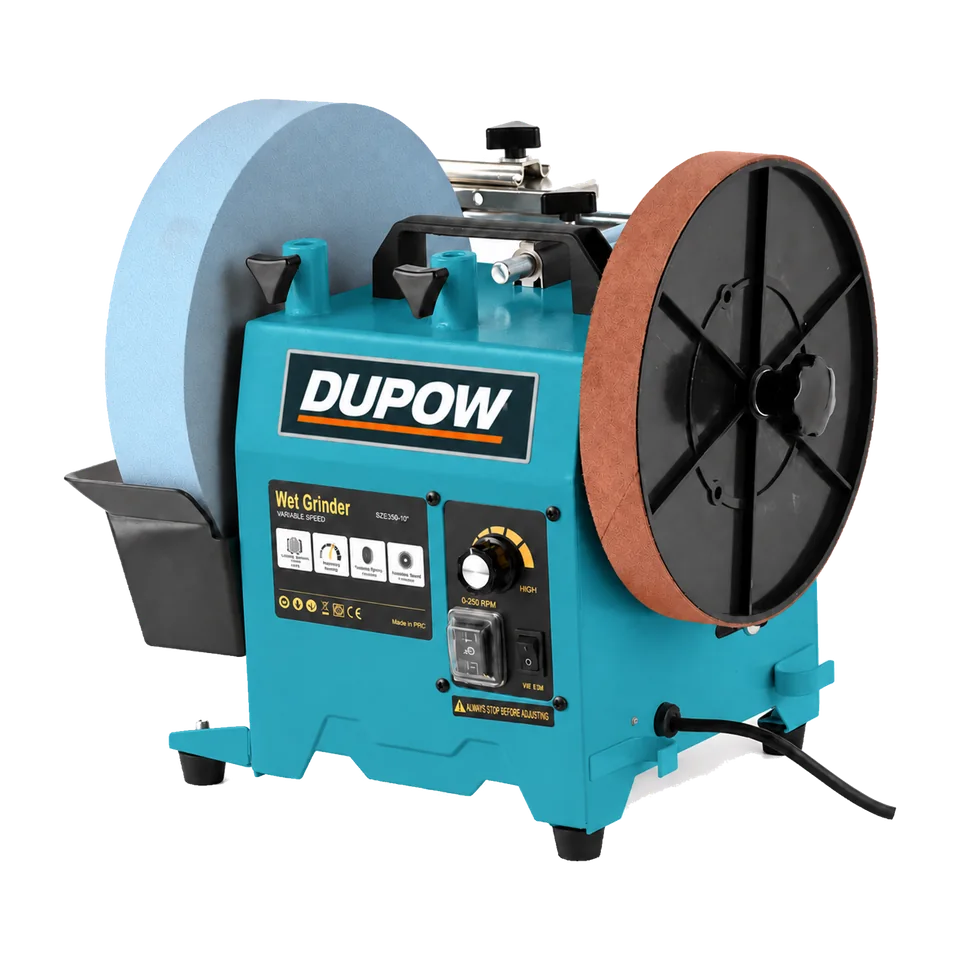
| DUP-WG-002 | 250 mm diameter, 12 mm bore, 50 mm width | 220 mm diameter, 12 mm bore, 32 mm width | 90–300 rpm; stepless |
Specify the wheel as a system
Record wheel part, dimensions, abrasive and intended sharpening task. Tormek’s grinding-wheel range illustrates how wheel options are defined by more than diameter. Compare supported wheel and jig references for the machine you are actually ordering. A shared bore dimension is one part of the compatibility check.
Approve a realistic edge-tool setup
Ask which water tray, holder and jig are included and which are optional. Request a sample setup with the intended tool, guide and wheel. Capture how the water tray is fitted and how the sample operator sets the grinding guide. Include the replenishment references for consumables, and compare the packed accessory list with the quotation.
Buyer FAQs
Can I interchange the grinding wheels based on the 12 mm bore?
Use the model’s documented dimensions, mounting and supported wheel specifications before approving an alternate part.
Why specify the jig when ordering the machine?
The jig and support determine how the tool is presented to the wheel. Identify the included fixtures for the buyer’s intended range of edges.
Read the related guide on How to source a private-label power tool manufacturer and build a coherent range or request a model-specific quotation with the configuration you need.