A focused hedge-trimmer offer should explain the intended trimming task, the tool's stated dimensions and the complete package the customer will receive. A single well-defined model can be useful to an importer when its specification, photographs and quotation describe the same product.
DUPOW's DUP-HT-001 is a 20V cordless hedge trimmer with a listed 480 mm blade length and a stroke-speed range of 0–3,000 s/min. This guide uses that model to show which fields belong in a channel brief, and how to turn the chosen configuration into clear wholesale or private-label product information.
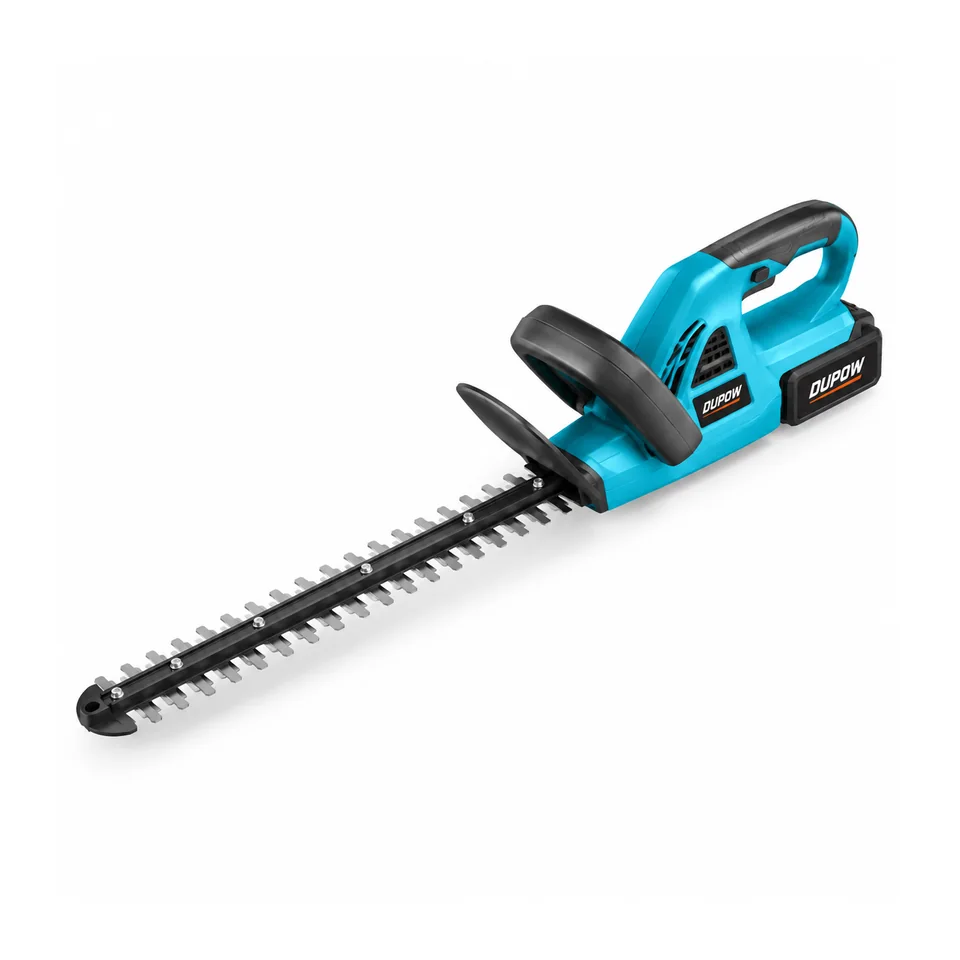
Define the trimming task and product position
Describe the hedge-maintenance task the sales channel needs to cover and the machine format the customer expects. Keep ordinary handheld trimming, extended-reach work and detailed low-level grass work as separate buying questions. They should not share the same product description merely because they are all garden-maintenance tasks.
STIHL's hedge-trimmer buying guide illustrates how product forms and trimming tasks can be organized within a range. It is a reference for the selection approach, not a source of performance figures or features for HT001.
For an opening order, write down where this model sits in the assortment and the information the retailer needs to explain it. That brief can guide the sample review, product photographs and quotation without inventing a higher or lower model to create an artificial comparison.
Keep blade length and stroke speed in their own fields
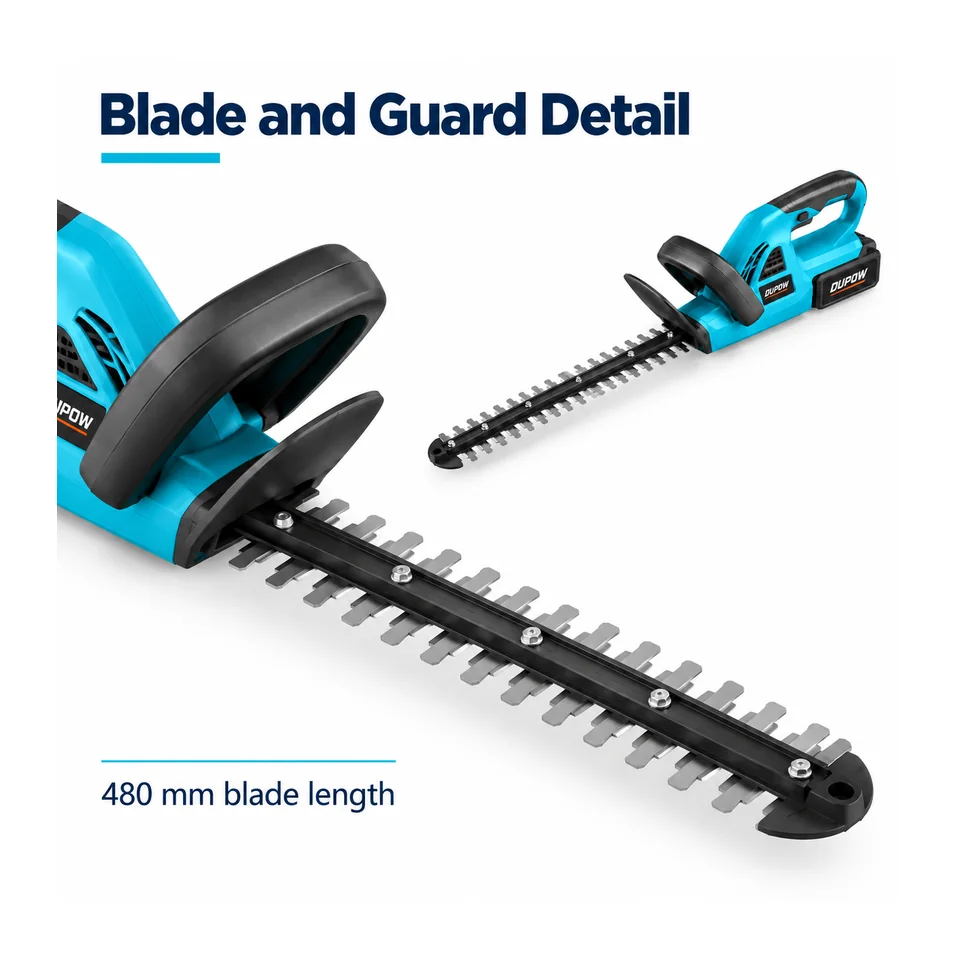
Use 480 mm as the listed blade-length entry for HT001. Keep the label with the measurement. Blade length should not become a statement about the maximum branch diameter the machine can cut.
The listed stroke-speed range is 0–3,000 s/min. Retain that description rather than rename it as a rotational speed. These fields explain different parts of the product specification and should be presented separately in a retail comparison.
| Specification or order field | HT001 record | Use in the buying brief |
|---|---|---|
| Product and supply voltage | 20V cordless hedge trimmer | Identify the tool position |
| Blade length | 480 mm | Describe the listed blade dimension |
| Stroke speed | 0–3,000 s/min | Retain the model's speed description |
| Battery supply | Tool-only or battery kit | Itemize the selected offer |
| Battery and charger version | Exact references in the quotation | Freeze the complete supply configuration |
| Branding and packing | Agreed order specification | Align the product page with the delivered kit |
The table combines a model specification with order decisions. Keep the chosen configuration attached to the same model reference through sample approval and packing.
Use the sample to approve the details your channel will describe
List the controls, handle arrangement, adjustment features and protective or accessory items the customer needs to identify. Review the features actually supplied with the selected model and use matching photographs in the sales material.
If a feature matters to the proposed listing, give it a clear sample-review item. A generic feature list copied from another hedge trimmer can create a mismatch between the page and the product. The better approach is to approve the selected tool and explain its actual structure.
Keep any handling or weight observation tied to the configuration used for that review. Identify the battery and attached items rather than combine bare-tool and assembled-tool observations under a single heading.
Specify the tool-only or battery-kit contents
Identify the tool, battery reference, battery capacity and quantity, charger version and the agreed accompanying items. A 20V description does not by itself define the battery interface or establish compatibility with another product.
Use the 20V platform planning guide when organizing a wider cordless assortment. For HT001, keep one contents list for each retail offer so the quotation, product page and packing specification can be checked together.
If the buyer requests several package options, show them as separate quoted configurations. A tool-only listing and a complete kit can share the same tool model while requiring different product images, contents descriptions and commercial comparisons.
Prepare photographs and instructions around the chosen model
Choose a main image that identifies HT001 clearly and add useful approved detail images where they help the buyer understand the actual product. Match any visible accessories to the contents list. Alternative configurations should not appear as standard contents without explanation.
Keep manual languages, product identity and packing requirements in the artwork brief. The private-label packaging checklist provides the wider approval sequence. For this model, the practical goal is a consistent product identity from the quotation to the retail page.
For a garden assortment, use the hedge-trimmer category as the product route. A separate pruning-shear guide helps keep branch-cutting specifications in the appropriate tool category.
Buyer FAQs
What blade length is listed for HT001?
DUP-HT-001 lists a 480 mm blade length. Keep this blade dimension separate from any cutting-diameter requirement in the customer's task brief.
Is 0–3,000 s/min a rotational speed?
It is the listed stroke-speed entry. Preserve that description instead of relabeling it as motor rpm in the comparison sheet.
Is a battery included with every offer?
Specify the tool-only or battery-kit format in the quotation. For a kit, identify the battery reference, capacity, quantity and charger version with the contents list.
What should a private-label brief contain?
Include HT001, quantities, destination, proposed trimming task, battery and charger configuration, required product information, branding, manual languages and packing.
Request an HT001 quotation with the configuration and channel requirements you need.