A useful angle-grinder range is built around the material, wheel size, duty pattern and channel—not around wattage alone. Importers should compare the complete configuration, including guard, spindle, switch, accessories, voltage version and packaging.
Start with the material and user
Define whether the range is intended for general metal preparation, fabrication, maintenance or lighter consumer work. The intended task influences the required disc family, output level, handling features and accessory set. Record these requirements before comparing quotations so that suppliers are pricing the same program.
Keep disc size and accessory compatibility together
Disc diameter affects the guard, spindle arrangement, working access and the accessories that can be approved with the tool. A 115 mm or 125 mm label should therefore be confirmed with the exact guard, flange, side handle and destination-market accessory list. Wheel choice and safe use remain the responsibility of the buyer, distributor and end user under the applicable instructions and local rules.
Compare power source and duty pattern
Corded models suit channels that value continuous availability and familiar voltage configurations. Cordless models can support mobile work and platform selling, but the battery interface, recommended pack, charger, kit format and service-stock plan must be frozen together. Do not assume that two products with the same voltage label share an approved platform.
Read speed and control features in context
No-load speed is one comparison point, not a complete performance claim. Buyers should also confirm speed-control format where offered, starting behavior, switch type, restart or overload functions where specified, ventilation, grip layout and the intended wheel family. Any feature used in marketing must be verified on the exact sample and written specification.
Representative DUPOW families
The following real product families illustrate how a range can cover compact corded, higher-output corded and cordless positions. Images and specifications refer to the current reviewed family pages; the order configuration remains subject to confirmation.
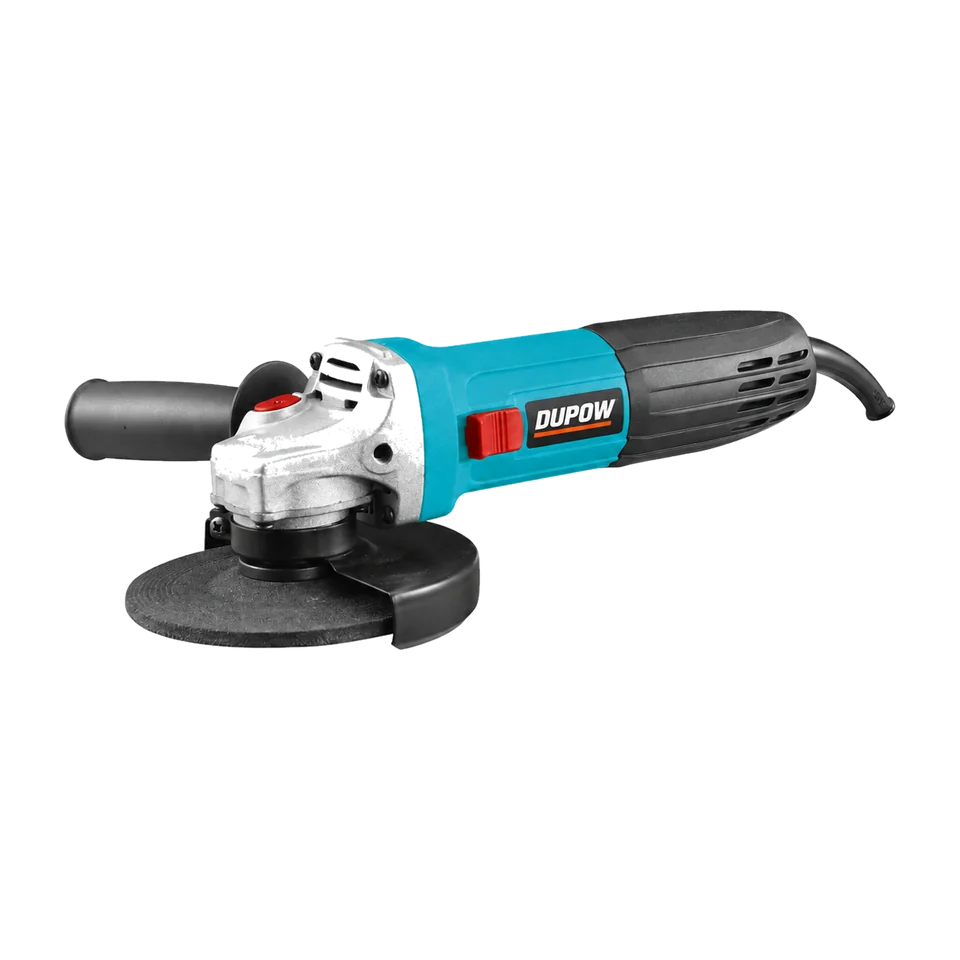 DUP-AG-006
750W 115/125 mm Angle Grinder
- Rated voltage: 110–120 V / 220–240 V
- Frequency: 50/60 Hz
- Rated input: 750 W
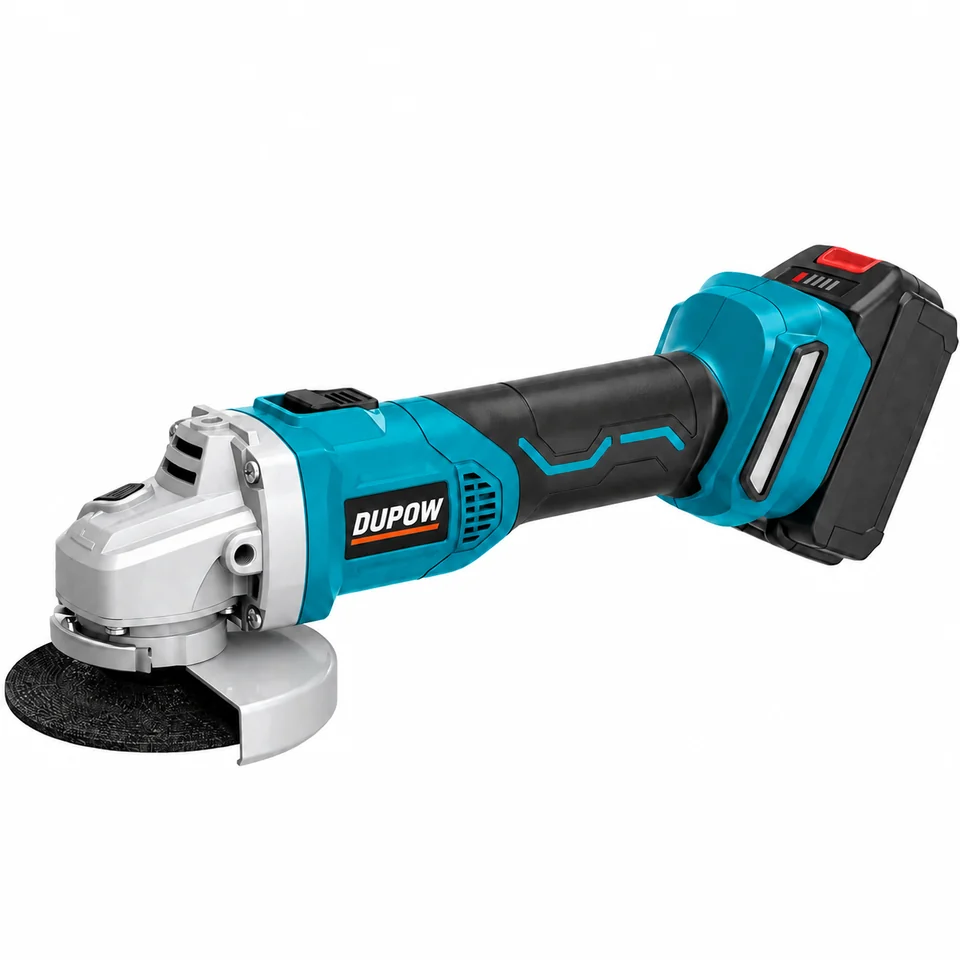 DUP-AG-012
20V Brushless 115 mm Cordless Angle Grinder
- Battery voltage: 18 V DC (20V Max platform)
- No-load speed: 7,500 rpm
- Disc diameter: 115 mm
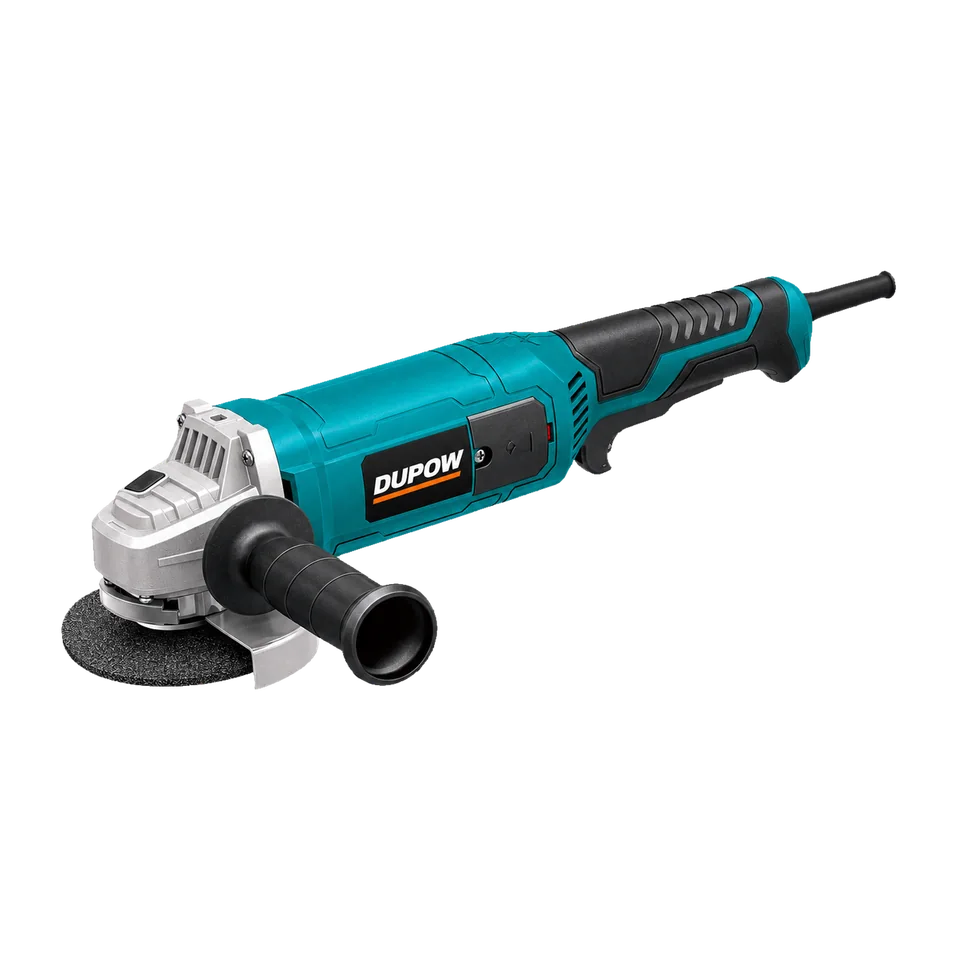 DUP-AG-020
1200W 115 mm Angle Grinder
- Voltage/frequency: 110–240 V, 50/60 Hz
- Rated input: 1,200 W / 10 A
- Disc family: 115 / 125 mm
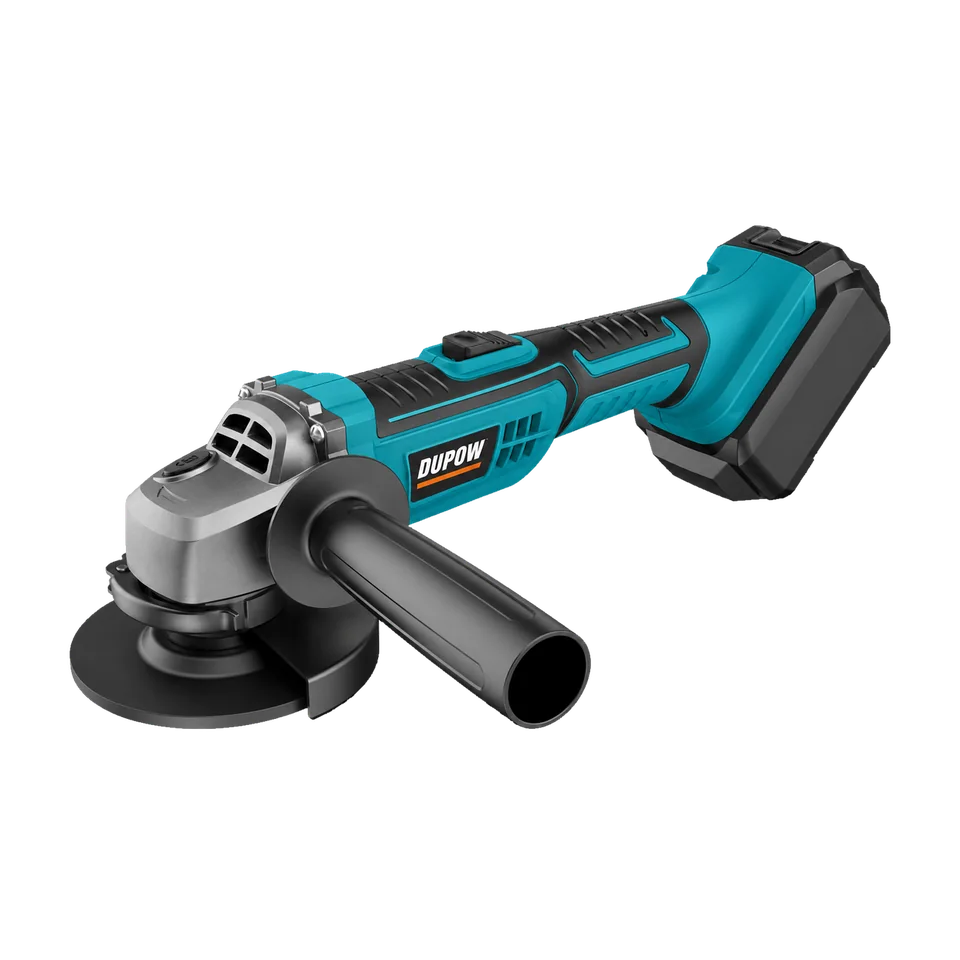 DUP-AG-032
20V Cordless 115 mm Angle Grinder
- Voltage/frequency: 20 V DC
- No-load speed: 7500 rpm
- Disc diameter: 115 mm
Freeze OEM and approval points
Before artwork begins, confirm the selected model, voltage and frequency, color scope, labels, manual languages, carton structure, accessories and any document requirements. Keep the approved sample, written specification and packaging record connected to the same model reference. This reduces the risk of a visual sample and the commercial order representing different configurations.
Angle-grinder RFQ checklist
- Destination market and sales channel
- Target user and principal materials
- Disc diameter and required spindle or accessory interface
- Corded voltage and frequency, or cordless platform and kit
- Switch, speed-control and starting requirements
- Guard, side handle, flange, spanner and accessory scope
- Branding, color, labels, manual and carton requirements
- Required sample, inspection and document checkpoints
- Estimated quantity by configuration
Compare the current DUPOW angle-grinder families, then use the power-tool sourcing route to send one comparable brief.
Questions buyers often ask
Should importers compare 115 mm and 125 mm angle grinders only by power?
No. Disc size, guard, spindle, speed, switch, accessory set, voltage version, intended duty and channel position should be reviewed together.
When does a cordless angle grinder belong in the range?
Add a cordless family when mobility and platform selling matter, after confirming the battery interface, pack, charger, kit format, runtime expectations and replacement-stock plan.
What should be included in an angle-grinder quotation request?
Send the market, quantity, disc size, voltage or battery platform, switch and speed requirements, accessories, OEM scope, packaging, manuals and document requirements.
This article provides general sourcing information, not legal, conformity or operating advice. Final specifications, documents and destination-market requirements must be confirmed for the exact model and order configuration.