Pressure alone does not define a useful gasoline pressure-washer range. Buyers should compare working pressure, water flow, pump and engine configuration, frame, hose management, accessories, service points and the cleaning jobs expected in the target channel.
Describe the cleaning jobs first
Separate vehicle, property-maintenance, agricultural and heavier outdoor-cleaning needs. Record the expected mobility, water source, working time, storage conditions and operator profile. This creates a practical basis for comparing models instead of selecting the largest pressure number.
Compare working pressure and water flow together
Working pressure and maximum pressure are not interchangeable. The RFQ should state which figure is being compared and pair it with water flow. Buyers should also confirm how the figures are measured, the pump configuration and the exact engine version. Marketing language should follow the approved written specification.
Choose a frame around transport and storage
A-frame, X-frame and cart formats create different handling, hose-storage and carton implications. Review wheel size, handle layout, hose reel where offered, stability, service access and the dimensions that matter for retail, warehouse and container planning. The best format depends on the channel rather than appearance alone.
Confirm pump, hose and accessory scope
Record pump type, inlet arrangement, high-pressure hose length, spray-gun and lance configuration, nozzle set, detergent provision and any quick-connect requirements. Confirm whether accessories are standard, optional or market-specific. Replacement seals, hoses, nozzles and other service parts should be identified before the first order.
Representative DUPOW families
These real product families show three frame and handling positions. The listed figures come from the current reviewed family pages; final order specifications and market requirements remain subject to confirmation.
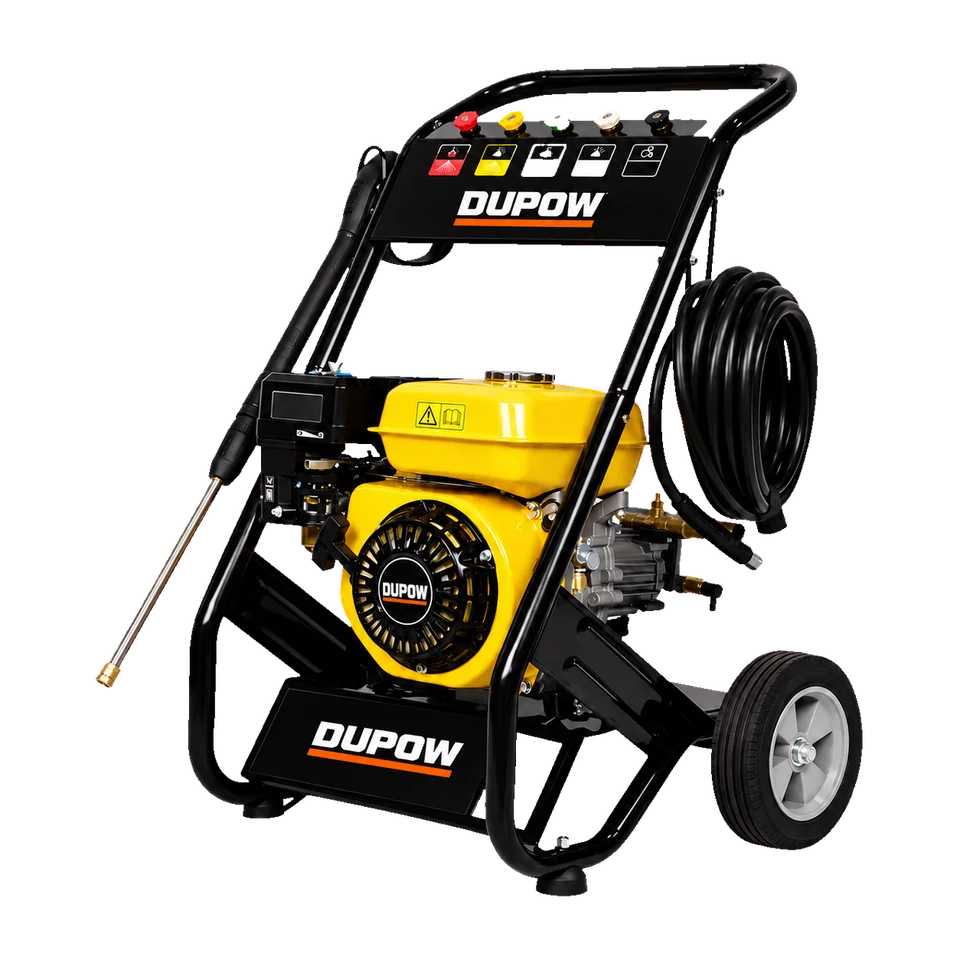 DUP-PW-001
150 / 173 bar A-Frame Gasoline Pressure Washer
- Working / maximum pressure: 150 / 173 bar
- Pressure equivalent: 2,175 / 2,508 psi
- Water flow: 7.5 / 9 L/min (2 / 2.4 gpm)
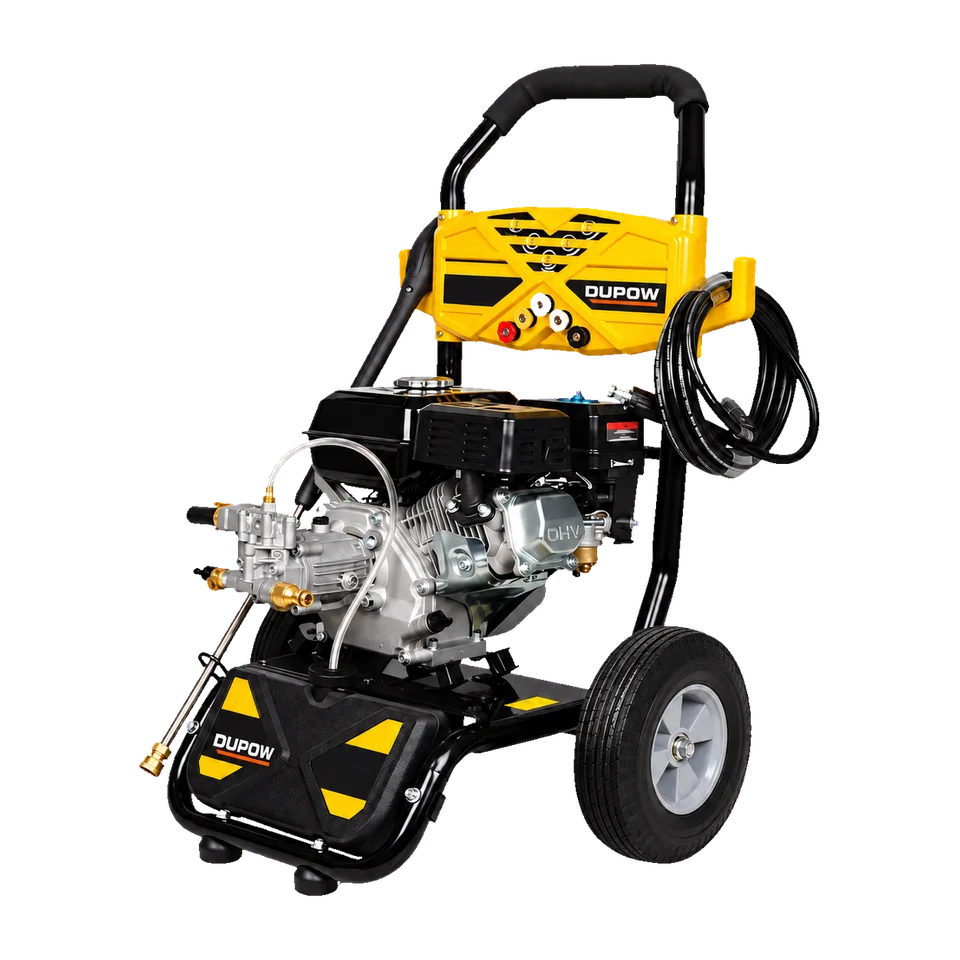 DUP-PW-005
150 / 173 bar X-Frame Gasoline Pressure Washer
- Working / maximum pressure: 150 / 173 bar
- Pressure equivalent: 2,175 / 2,508 psi
- Water flow: 7.5 / 9 L/min (2 / 2.4 gpm)
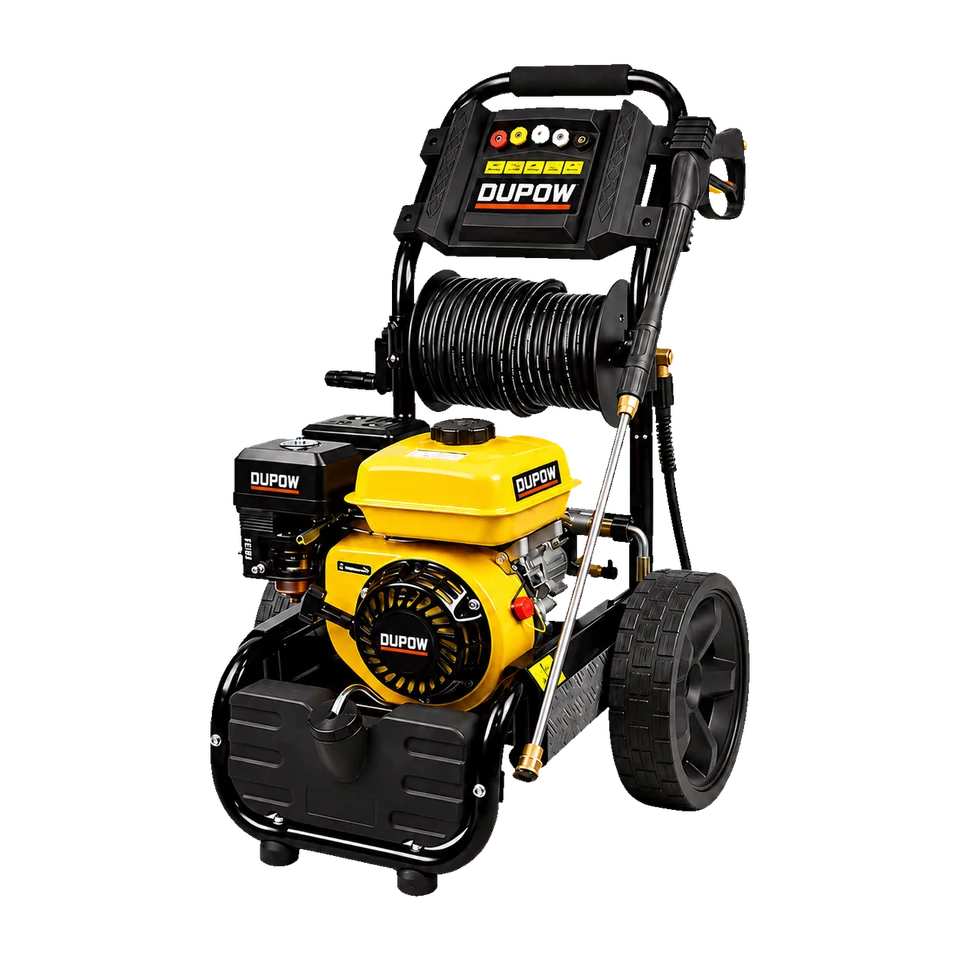 DUP-PW-008
180 bar Hose-Reel Cart Gasoline Pressure Washer
- Working / maximum pressure: Up to 180 bar
- Pressure equivalent: 2,300–2,600 psi
- Water flow: 8–9 L/min (approx. 2.1–2.4 gpm)
Plan inspection around the approved sample
Inspection checkpoints should connect the approved sample, written specification, labels, accessories and packaging. Typical order-specific checks may cover recorded engine and pump references, basic function, visible leakage, controls, hose and nozzle contents, fasteners, labels, carton condition and agreed packing quantities. The final inspection plan must match the exact product and order.
Gasoline pressure-washer RFQ checklist
- Destination market and sales channel
- Cleaning applications and expected duty
- Working pressure, maximum pressure and water-flow target
- Engine and pump configuration to be quoted
- Frame, wheels, handle and hose-storage format
- Hose, gun, lance, nozzle and detergent accessories
- Service-parts and after-sales requirements
- Branding, labels, manuals and carton requirements
- Sample, inspection and document requirements
- Estimated order quantity
Review the DUPOW pressure-washer families and the garden-equipment sourcing program before sending the final shortlist.
Questions buyers often ask
Is maximum pressure enough to compare gasoline pressure washers?
No. Compare working pressure and maximum pressure separately, then review water flow, pump, engine, hose, nozzles, frame and intended cleaning duty.
Does frame style change the commercial configuration?
Yes. Frame, wheels, handle and hose management affect transport, storage, packaging, service access and channel positioning.
What should be included in a pressure-washer RFQ?
Send the market, cleaning applications, pressure and flow target, engine and pump requirements, frame, hose and nozzle scope, service parts, OEM packaging and estimated quantity.
This article provides general sourcing information, not legal, conformity or operating advice. Final specifications, documents and destination-market requirements must be confirmed for the exact model and order configuration.