A useful cordless drill range gives buyers clear reasons to choose one model over another. For an importer or private-label brand, that starts with the jobs customers need to complete, the chuck specification, the torque data and what each retail package contains. A shared 20V label is a starting point for the discussion; the model and kit details make the offer comparable.
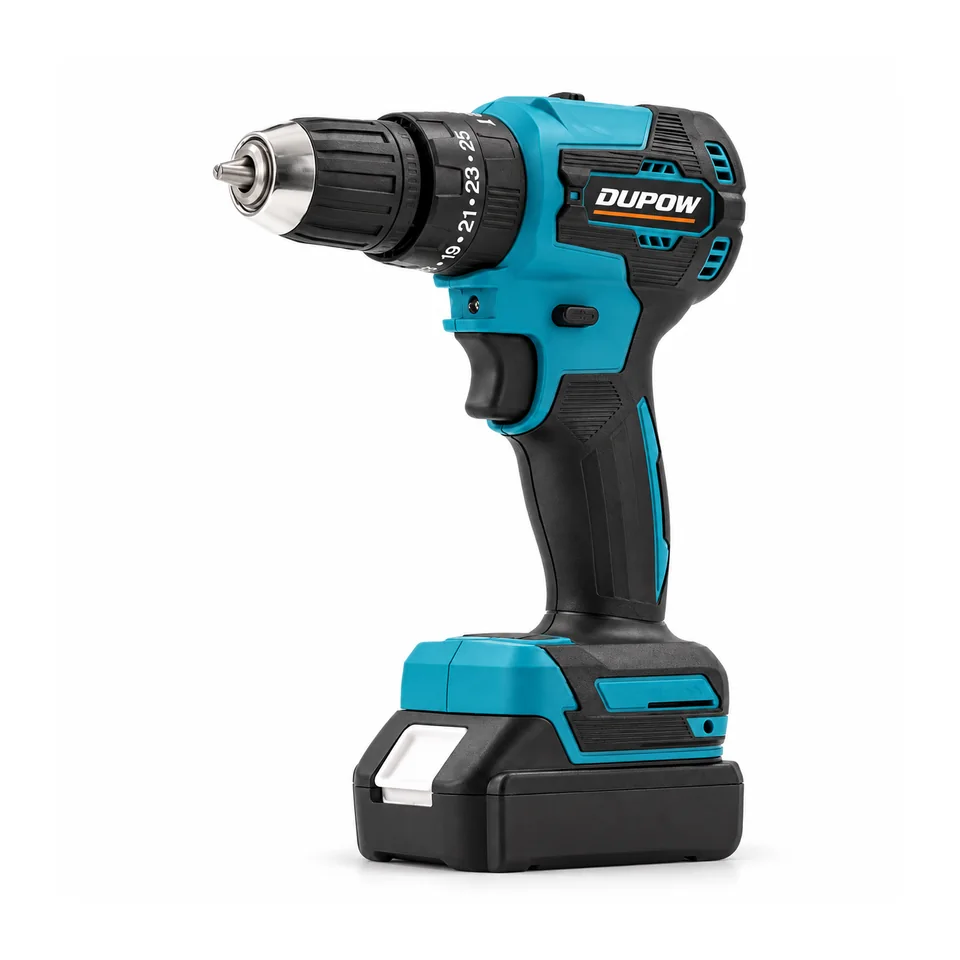
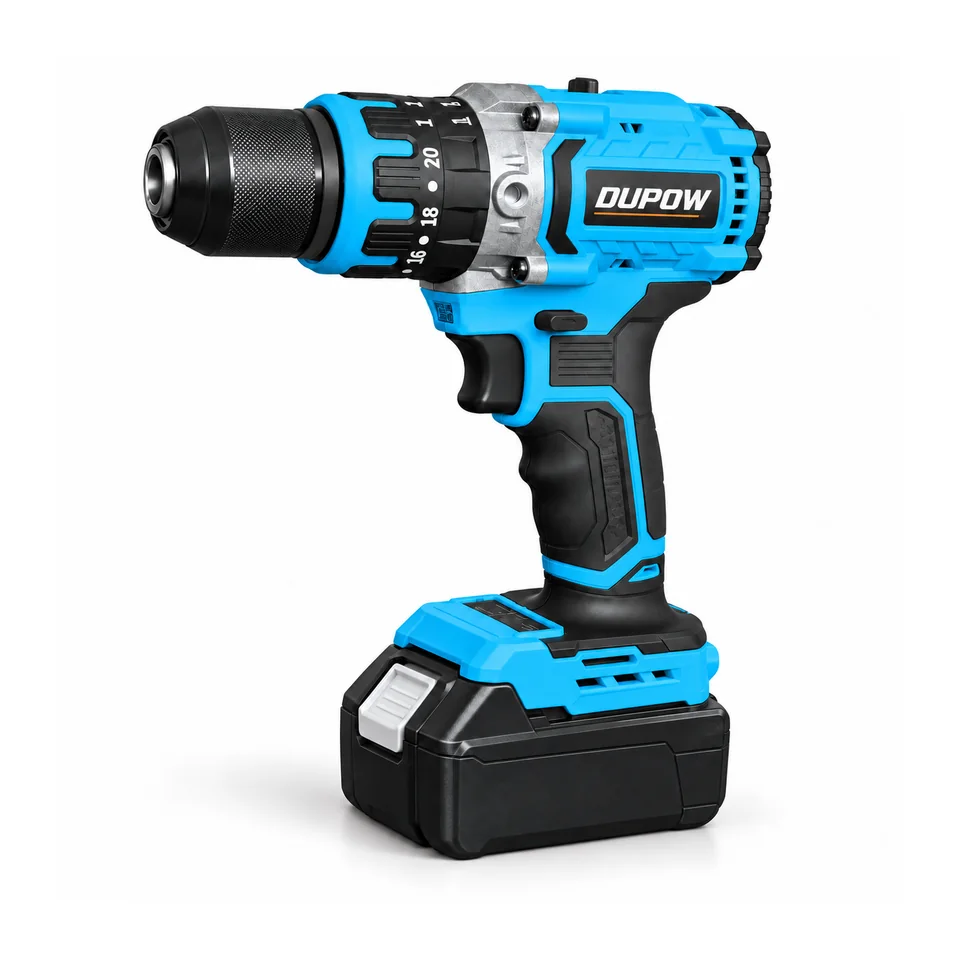
This guide uses two DUPOW models to show how to build that comparison: the 10 mm, 35 Nm DUP-CD-014 and the 13 mm, 45 Nm DUP-CD-008. The aim is to help you prepare a focused shortlist and a quotation brief that your purchasing, product and sales teams can use together.
Start with the jobs and the selling format
Write down the work your customers expect from the drill before selecting a model. An assembly-focused offer, a home-maintenance assortment and a general drilling range may need different accessories, product descriptions and sample checks. Specify the intended materials, fasteners and drill bits so the sample review has a defined task.
Then decide how the product will be sold. A distributor may want a bare tool alongside an established battery offer. A private-label brand may need a complete starter kit. An ecommerce seller needs an exact list of included items for each listing. These choices affect the quotation and stock structure, even when the drill itself stays the same.
Compare 10 mm and 13 mm chucks with the actual specification
The chuck capacity describes the size of the shank it can accept. Keep it separate from the drill's capacity in a particular material. A 13 mm chuck does not, by itself, establish a 13 mm drilling limit or guarantee the same drilling capability in wood, steel and masonry. Manufacturers also list chuck capacity and material-specific drilling diameters separately in their technical data; see this Bosch technical-data example.
For a DUPOW shortlist, the two models offer the following specification differences:
| Model | Chuck capacity | Maximum torque |
|---|---|---|
| DUP-CD-014 | 10 mm | 35 Nm |
| DUP-CD-008 | 13 mm | 45 Nm |
Use these differences to define two product positions, then match each position to your customers' actual tasks and accessories. The larger chuck and higher listed maximum torque give CD008 a distinct specification. Your sample review should establish which model fits each intended job and selling price.
Browse the cordless drill category when you need a wider comparison rather than a two-model shortlist.
Read torque and speed as separate specifications
Torque and speed answer different purchasing questions. Torque data concerns turning force; speed data describes rotation. Neither figure alone provides a complete account of how a drill performs in your chosen application.
CD014 has a listed no-load speed range of 0–450 / 0–1,800 rpm. Keep that figure attached to CD014 when preparing a comparison sheet. A maximum-torque figure should likewise retain its stated definition and model reference; avoid treating different suppliers' headline numbers as a controlled performance test.
For sample comparison, give each supplier the same task brief. Record the material, bit or fastener, selected gear, battery configuration and result. Ask your team to assess control and handling with the battery configuration you intend to sell. This produces more useful buying evidence than choosing on the largest torque number alone.
Specify the bare tool or the complete kit
Make the quotation describe one complete order configuration. For a bare-tool offer, identify the tool and its packing. For a kit, add the battery model, capacity and quantity, charger version, accessories and package type. A one-battery kit and a two-battery kit should have separate, clear item lists.
Treat the selected tool, battery and charger as a defined combination. The voltage marking alone does not establish compatibility across a range. If you are building several 20V categories, use the 20V platform planning guide to organize that wider decision, then browse the 20V cordless collection for adjacent product positions.
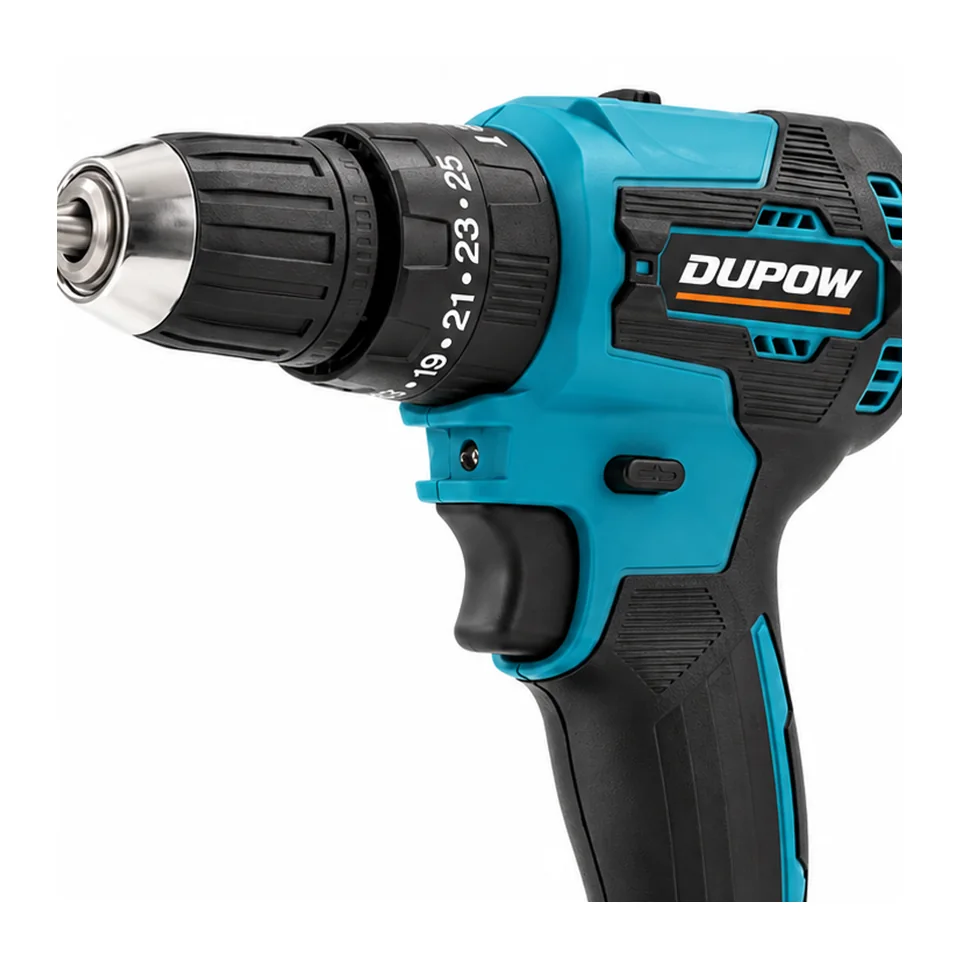
Product photographs help the buyer identify the model and visible features. The quotation's included-items list defines what is supplied. Carry the same list into the carton artwork, retailer information and online listing so customers receive the configuration they ordered.
Prepare the private-label and ecommerce approval brief
Once you select a model, put its product name, specifications, branding and kit contents into one approval record. Keep the drill model distinct from the retail SKU: the same drill can be offered in different approved packages, and each package needs its own accurate contents and identity.
For private label, include the logo artwork, marking positions, packaging format and required manual languages. For ecommerce, add the listing's included-items text and photographs of the selected configuration. Review those materials against the approved sample before releasing the final version to your sales team.
Use the existing private-label packaging checklist for the detailed artwork and packing review. In this drill brief, concentrate on the model and the differences your customer will see.
Send a model-specific drill request
A concise drill RFQ should include:
- The model reference and quantity for each model.
- Intended tasks, materials and important accessory requirements.
- Destination market and sales channel.
- Bare-tool supply or a complete battery, charger and accessory list.
- Branding, manual languages and packing requirements.
- The sample configuration you want to review.
These details let us prepare a model and order quotation with a clear scope. The power tool RFQ guide provides a wider template for a multi-product enquiry.
Buyer FAQs
Does a 13 mm chuck mean a 13 mm drilling capacity in every material?
No. Chuck capacity describes the accepted shank size. Drilling capacity depends on the specific model, material and tool setup. Keep these as separate fields when comparing models or preparing a retail description.
Are batteries and chargers included with the pictured drill?
DUPOW offers bare-tool and kit quotations. Your selected battery, charger and accessories are itemized in the quotation. Use that list when approving the retail package and product listing.
Can one battery work with every 20V drill?
Choose a specific tool, battery and charger combination. A 20V marking does not establish universal interchangeability. For a wider range, organize the approved combinations in a model-by-model platform list.
What should a private-label buyer include in a drill RFQ?
Send the model, quantity, destination, intended tasks and kit requirements, together with your branding and packing brief. Include the sample configuration so the product review and commercial quotation describe the same offer.
Request a cordless drill shortlist with the models, quantities and selling format you have in mind.