Choose a portable compressor by the required air delivery at the intended working pressure. Then compare receiver capacity, maximum pressure, electrical version and portability. A larger receiver can change how the system buffers intermittent demand. The listed tank size alone does not establish delivered flow.
| Model | Tank and maximum pressure | Catalogue delivery | Supply |
|---|---|---|---|
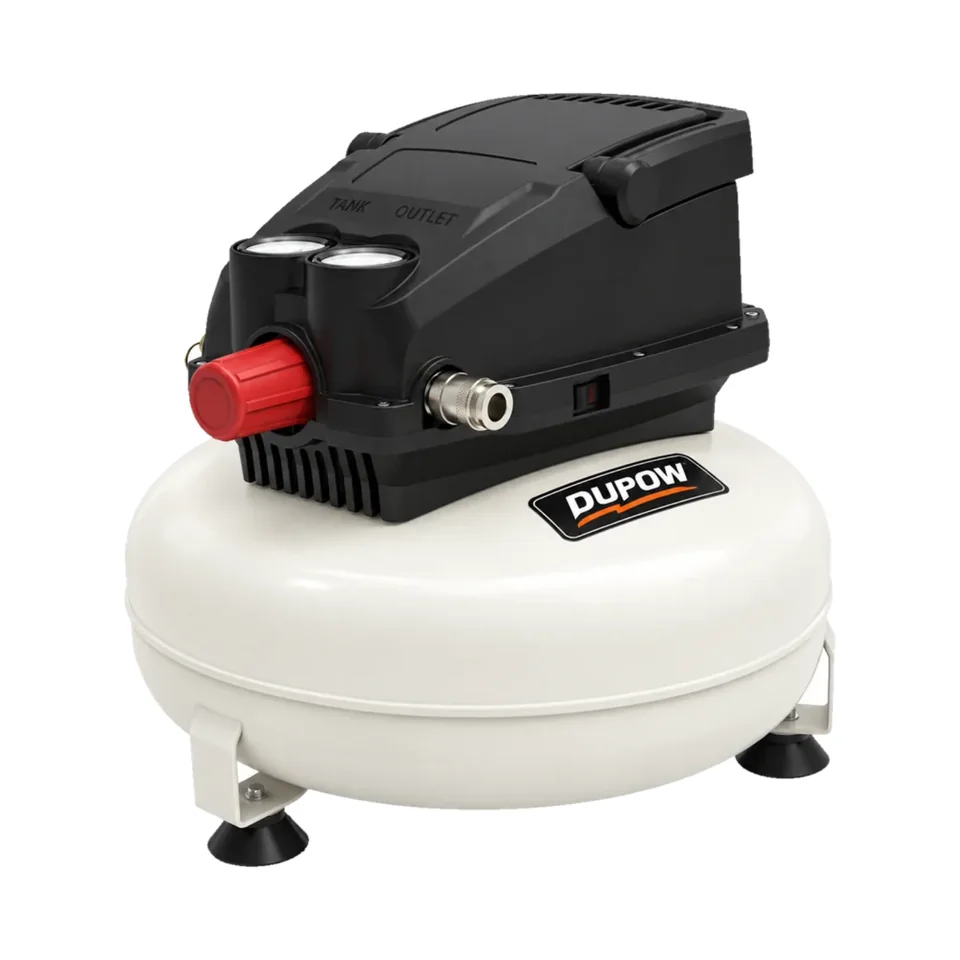
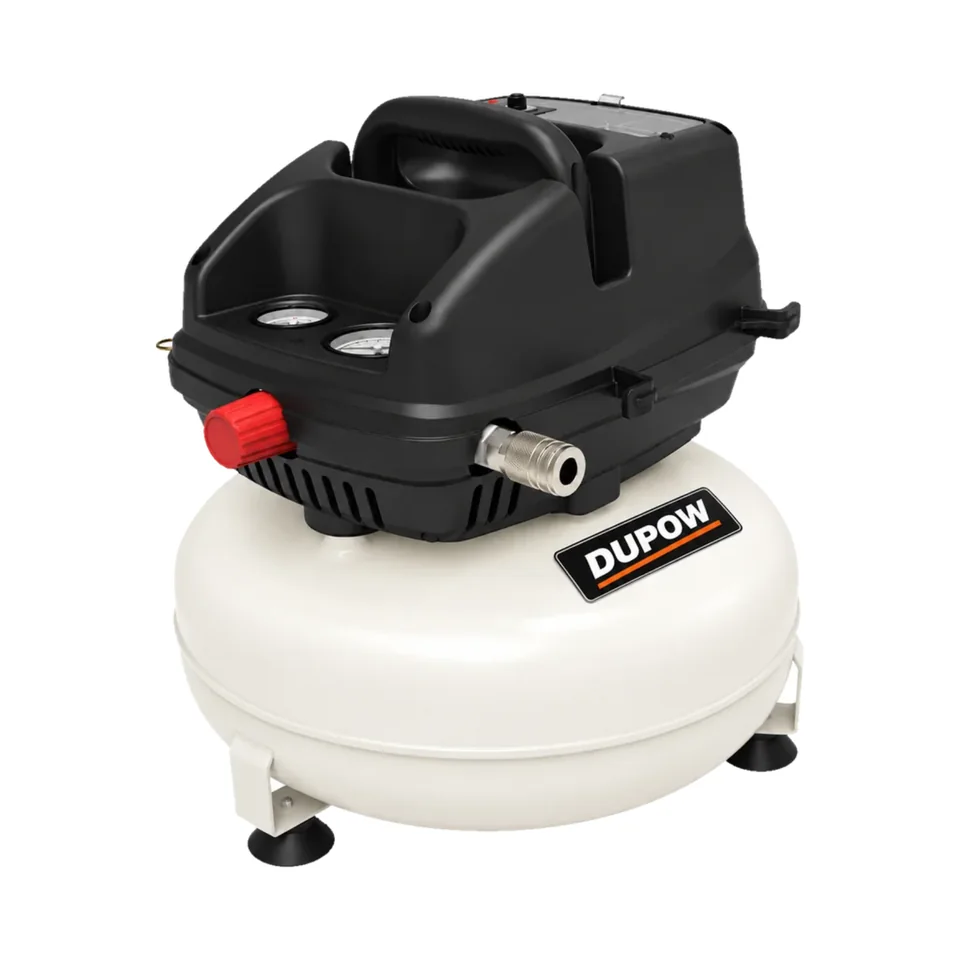
| DUP-AC-003 | 2 gal; 100 psi | 45 L/min | 120 V, 60 Hz |
| DUP-AC-004 | 3 gal; 100 psi | 45 L/min | 120 V, 60 Hz |
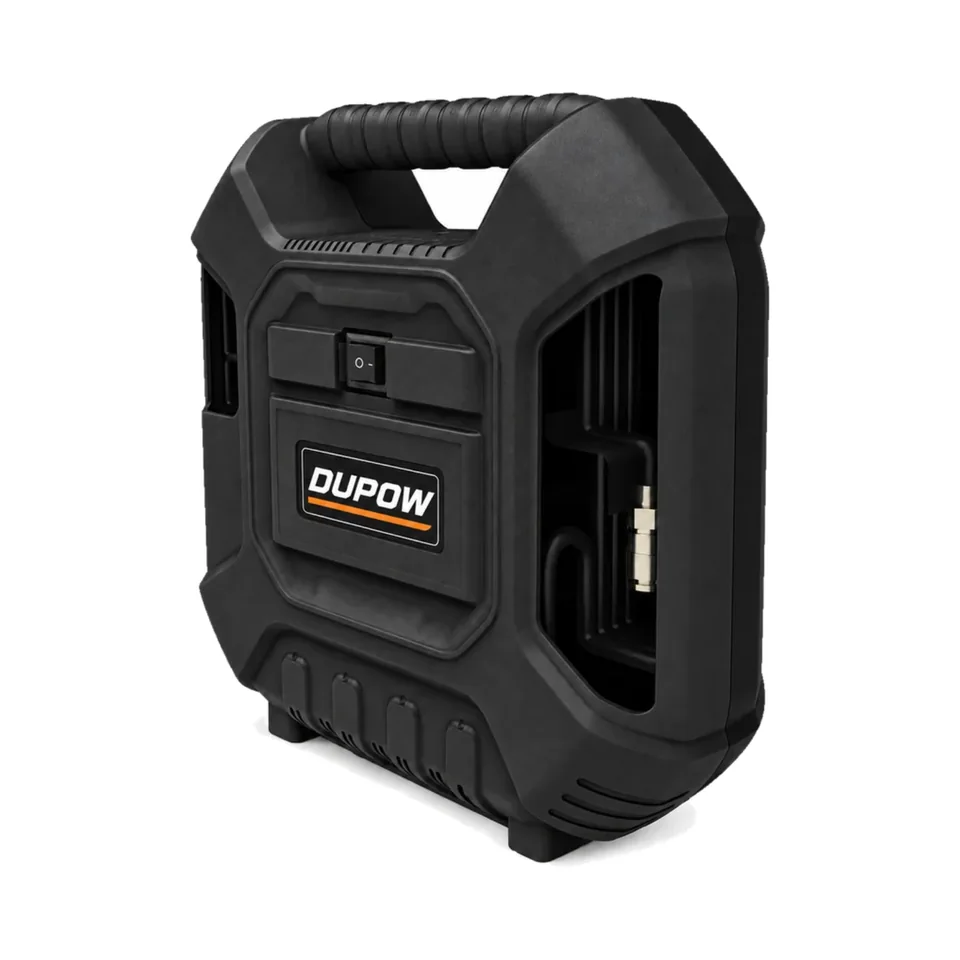
| DUP-AC-005 | Confirm tank configuration; 8 bar | 180 L/min | 220–240 V, 50 Hz |
Confirm the flow basis
The Atlas Copco guide to compressor measurements explains the importance of the measurement conditions for comparing flow. Ask for the delivered flow at the buyer’s working pressure, the stated test basis and the permitted duty pattern. Do not infer those values from a maximum pressure or an unlabeled catalogue flow.
For a service counter or mobile workshop, record the intended use, outlet coupling, regulator and connector. Ask for the version’s measured carrying weight and for the actual outer carton. The two 120 V models above are useful examples of a tank choice with the same listed pressure and delivery entries.
Buyer FAQs
Can I compare the listed L/min values directly?
First establish whether they use the same delivery definition, reference conditions and outlet pressure.
What information should I send for a workshop quote?
Send the tools, intended pressure and consumption, how long they run, supply voltage, connection and desired tank or carrying format.
Read the related guide on What Information to Include in a Power Tool RFQ or request a model-specific quotation with the configuration you need.