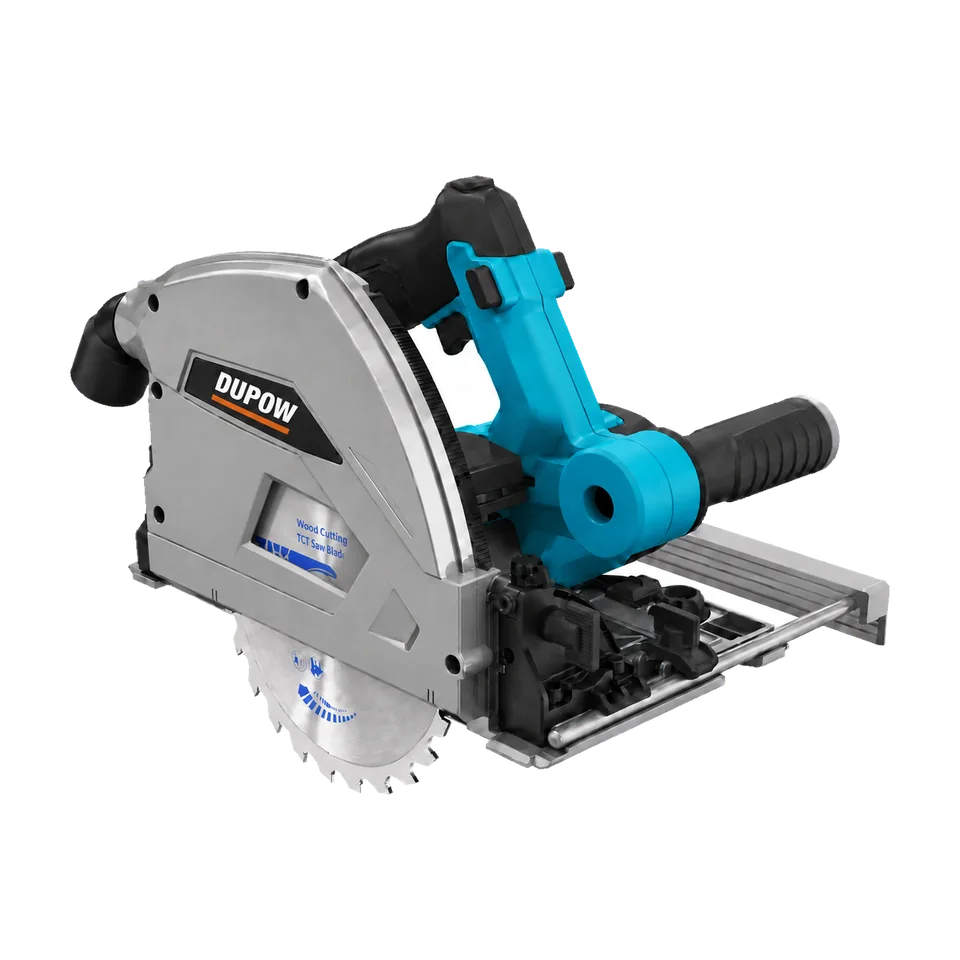
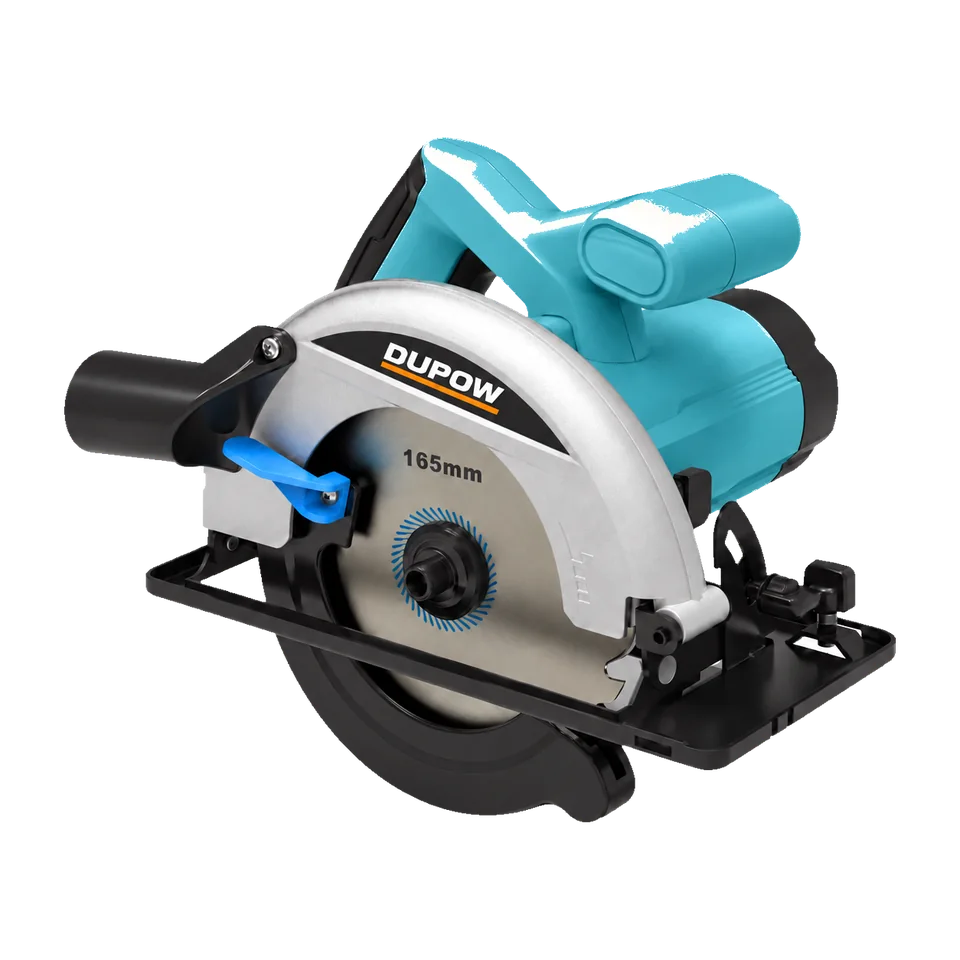
Offer a plunge saw when buyers need a controlled plunge entry and a compatible guided workflow. Offer a standard circular saw for the cutting tasks supported by its base and supplied guide. Compare cutting depth with the guide fitted where relevant, and include the guide configuration in the quotation.
| Model and setup | Blade | Listed cutting depth | What to specify |
|---|---|---|---|
| DUP-CS-007 without rail | 165 mm | 57 mm at 0°; 42 mm at 45° | Saw and supplied blade |
| DUP-CS-007 with rail | 165 mm | 51 mm at 0°; 36 mm at 45° | Rail model, length and contents of the quotation |
| DUP-CS-001 | 165 mm | 55 mm at 90°; 38 mm at 45° | Standard saw with listed parallel guide |
The angle entries above retain each model’s catalogue convention. Confirm whether the zero or 90 degree label represents the perpendicular setting in the supplied instructions before building a customer-facing comparison.
Separate the guide system from the cutting tool
For CS-007, check rail fit, rail length and any connectors or clamps needed for the buyer’s job. Record whether the rail is part of the offer. For CS-001, record the supplied parallel guide and any optional guide features as different order lines. A shared blade diameter does not establish a shared rail or base.
Buyer FAQs
Which CS-007 depth should I use for a guided cut?
Use the listed depth with rail for the required angle and verify the ordered rail configuration.
Can I assume the rail ships with the plunge saw?
Itemize the saw, rail, blade and related accessories in the quotation before making a contents claim.
Read the related guide on Build a portable saw range around cutting jobs or request a model-specific quotation with the configuration you need.