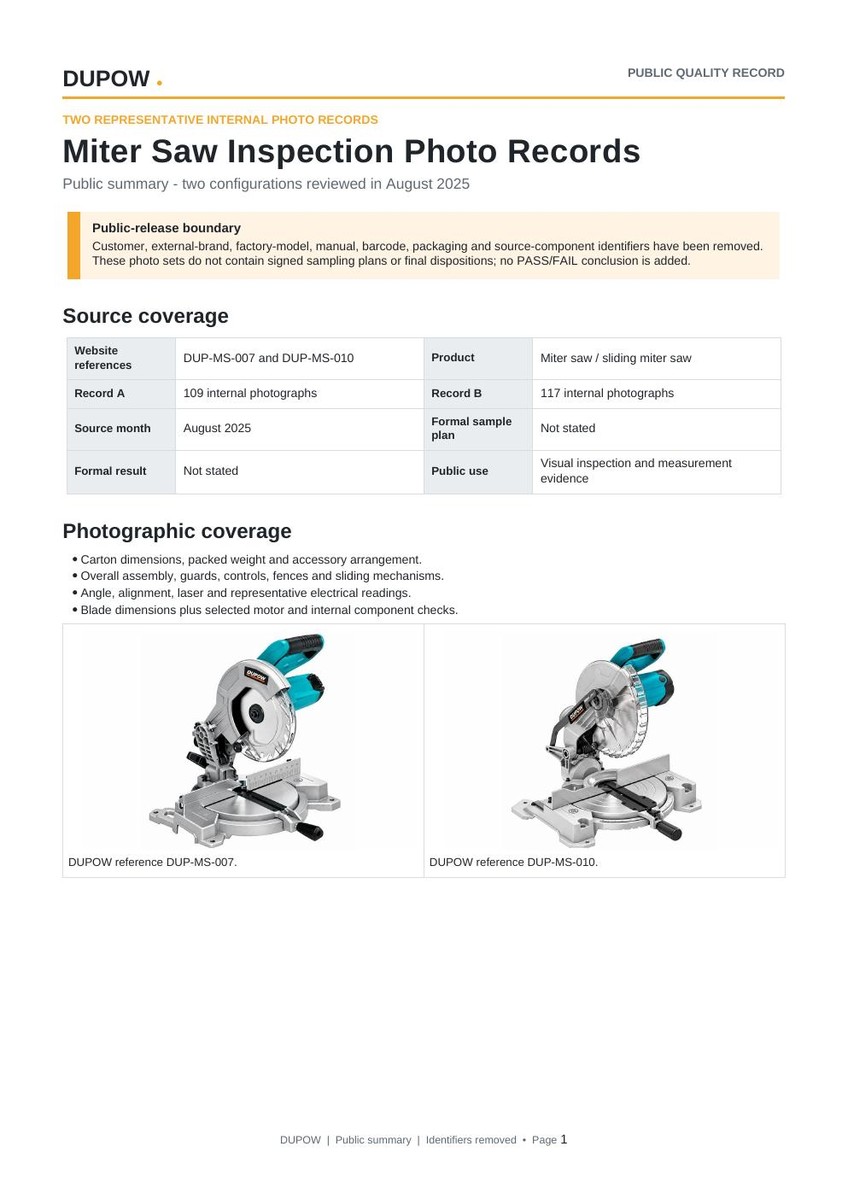
The public miter saw file combines two separate internal photo sets linked to DUPOW references DUP-MS-007 and DUP-MS-010. Customer, external-brand, factory-model, manual, barcode, packaging and source-component identifiers were removed.
- Record A
- DUP-MS-007 reference; 109 internal photographs
- Record B
- DUP-MS-010 reference; 117 internal photographs
- Formal status
- No signed sample plan or final disposition stated
The buyer question
Can each selected saw configuration be reviewed through visible assembly, alignment, controls, blade-related data and selected electrical or internal checks before shipment planning begins?
What the miter saw records support
- Packaging and supply: carton dimensions, packed weight and accessory arrangement were photographed in the source sets.
- Assembly: guards, controls, fences, tables, underside and sliding mechanisms were reviewed.
- Alignment and features: angle, fence/table alignment, representative indicator measurement and laser-line position were recorded.
- Selected internal checks: blade dimensions, motor and winding views appear in the source evidence.
Why the two configurations stay separate
Combining the public pages makes buyer review easier, but it does not establish equivalence. Each reference needs its own approved specification, sample, evidence scope and release decision.
The shipment stage is a separate control
The representative container loading record shows empty-container condition, carton placement, progressive loading and near-complete loading. It does not identify a product mix, date, carton quantity, seal or acceptance status and is not claimed to be the shipment for these saw records.
A future order should connect the product release and shipment release through order-specific references, carton quantities, container and seal details, responsible persons and final signatures.
This case distinguishes two product configurations and one unrelated representative loading record. It does not claim that they belong to one customer, order or shipment.