A cordless rotary hammer range should make the material and drilling requirement clear before the buyer compares power formats or prices. Toolholder type, drilling capacity and impact energy are separate fields. Keeping them separate helps an importer choose a useful assortment and gives a private-label team a defined specification to review with its samples.
This guide compares DUPOW's DUP-RH-001, DUP-RH-002 and DUP-RH-003. All three are listed with an SDS-plus toolholder, while their stated impact energy and drilling capacities provide different model positions. The next step is to match those positions to the buyer's material, hole size and order configuration.
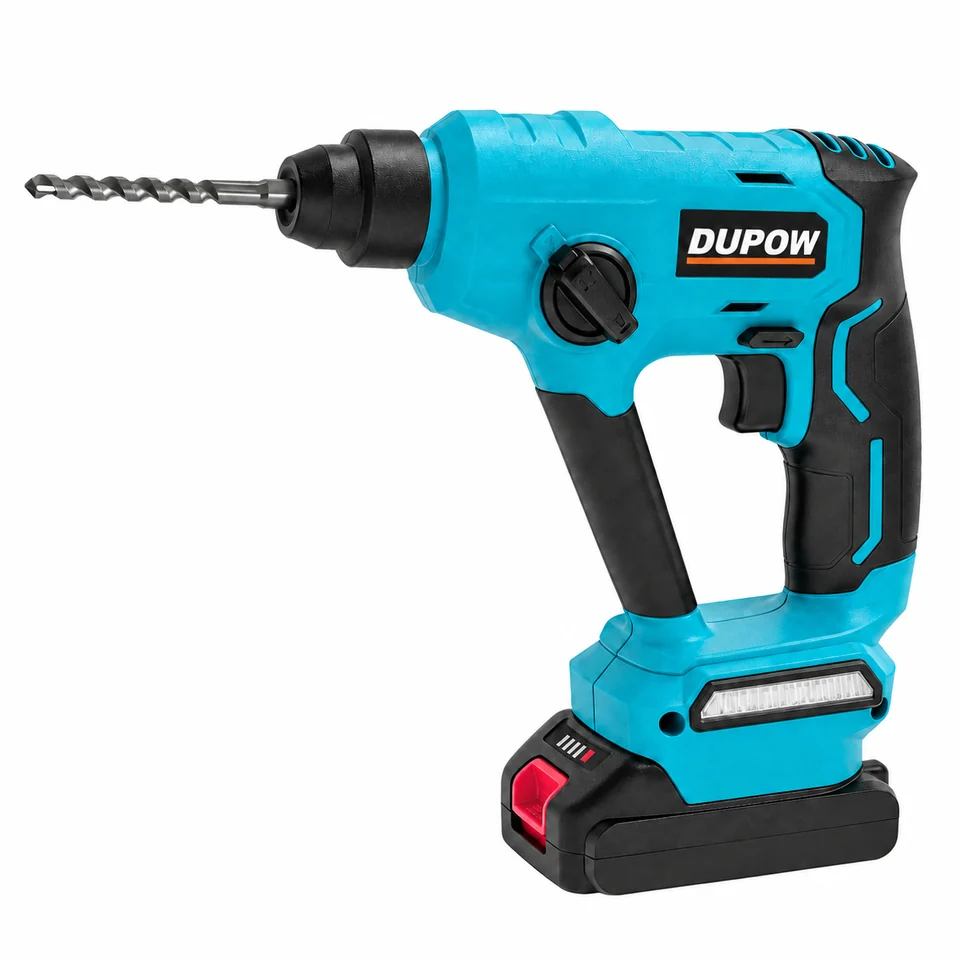
Describe the material and hole requirement
Start with the material, required hole diameter and expected work pattern. If the customer will review the tool for several materials, give each material its own requirement. A concrete capacity should not be copied into a steel or wood column, even when the product name uses only one headline diameter.
The sample brief should also identify the drill bit or accessory used for the proposed task. Keep accessory identity with the result so the buyer can understand what was assessed. For distribution, record which tasks the channel needs to explain to its customers and which attachments belong in the retail package.
The RFQ guide helps gather destination, quantities and branding. The rotary-hammer brief adds the material and drilling fields that make the model comparison useful.
Confirm the toolholder before selecting accessories
RH001, RH002 and RH003 list SDS-plus toolholders. Keep that designation in the quotation and accessory record. Toolholder names should remain specific instead of being shortened to a generic “SDS” description when ordering replacement or additional accessories.
Bosch's explanation of SDS-plus and SDS-max distinguishes the two systems and their different shank dimensions. That is a useful reference for the terminology. It does not change the listed SDS-plus specification of these DUPOW models or establish that an accessory from another system is interchangeable.
For the order, name the proposed drill bits and any additional adapters or attachments individually. Keep the contents list consistent with the sample and the product photographs used for the chosen kit.
Compare drilling capacity by material
| Model | Listed maximum impact energy | Concrete / steel / wood drilling capacity | Listed no-load speed and impact rate |
|---|---|---|---|
| DUP-RH-001 | 1.2 J | 13 / 10 / 16 mm | 0–1,100 rpm; 0–4,800 bpm |
| DUP-RH-002 | 2.0 J | 20 / 13 / 26 mm | 0–1,000 rpm; 0–5,000 bpm |
| DUP-RH-003 | 2.2 J | 22 / 13 / 28 mm | 0–1,000 rpm; 0–5,000 bpm |
These figures establish the stated specification positions. Choose a shortlist using the hole sizes and materials in the brief, then review the proposed tool and accessory configuration for the intended task. A higher maximum capacity is not a measurement of how many holes a customer will complete during a shift.
RH002 and RH003 share the listed speed and impact-rate ranges, but their impact energy and maximum capacities differ. A comparison that shows only voltage and speed would hide those differences. RH001 provides a separate 13 mm concrete-capacity position with its own speed and impact-rate entries.
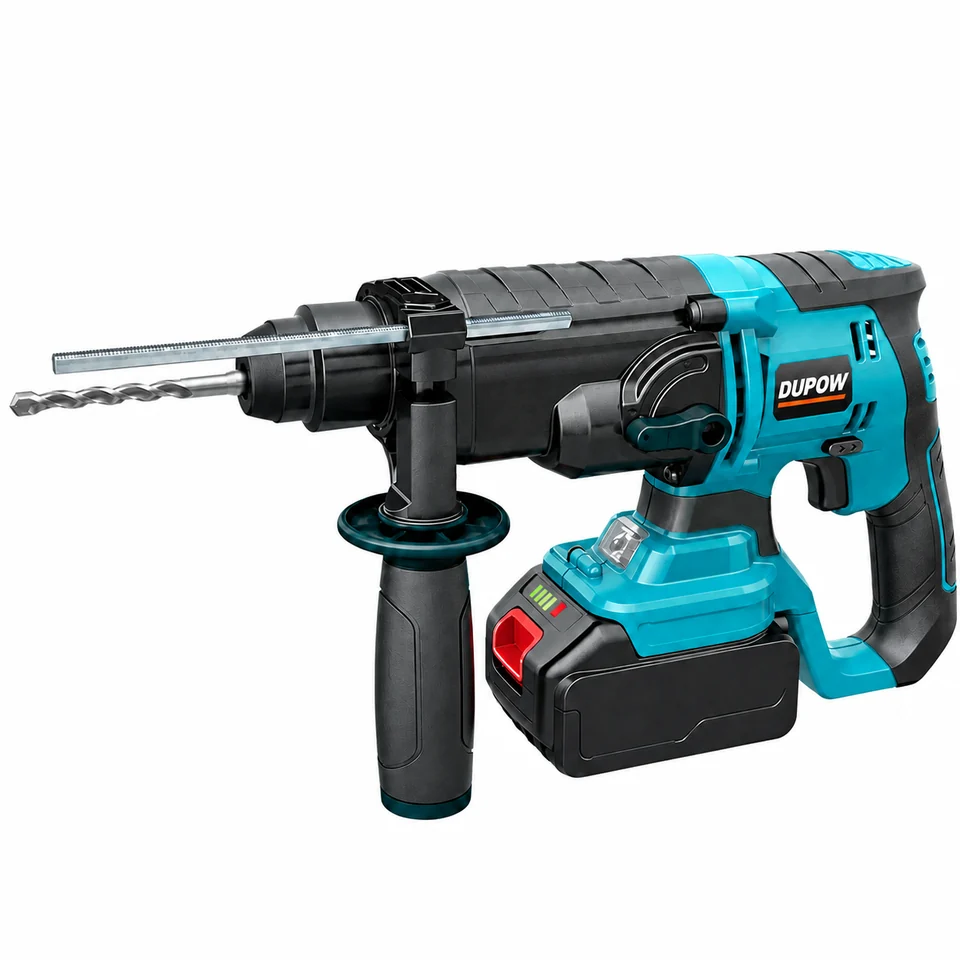
Keep impact energy, speed and operating modes distinct
Impact energy is stated in joules, rotational speed in revolutions per minute and impact rate in blows per minute. Use separate columns so these measurements cannot be mistaken for one another. The three fields describe different aspects of the tool's specification.
Describe operating modes using the selected model's documentation and controls. A shared toolholder does not establish that every model has the same mode selector or chiselling function. If a particular mode is important to the sales channel, include it as a named sample-review item and approve the corresponding explanation for the manual and product page.
For a model comparison sheet, retain the exact unit and the material associated with each capacity. This is more useful than presenting several numbers beneath a broad “power” heading, and it makes the information easier to transfer into a distributor's catalogue.
Assess the complete handling configuration
Evaluate the sample with the proposed battery, handle arrangement and accessory setup. Record what is attached whenever handling or weight forms part of the approval. This prevents a bare-tool observation from being compared with a different tool carrying a battery and additional attachment.
Prepare a short review sheet with the tool model, supplied components, controls to identify and agreed drilling task. Keep observations connected to that configuration. Retail photographs should show the same model and clearly distinguish included accessories from additional options.
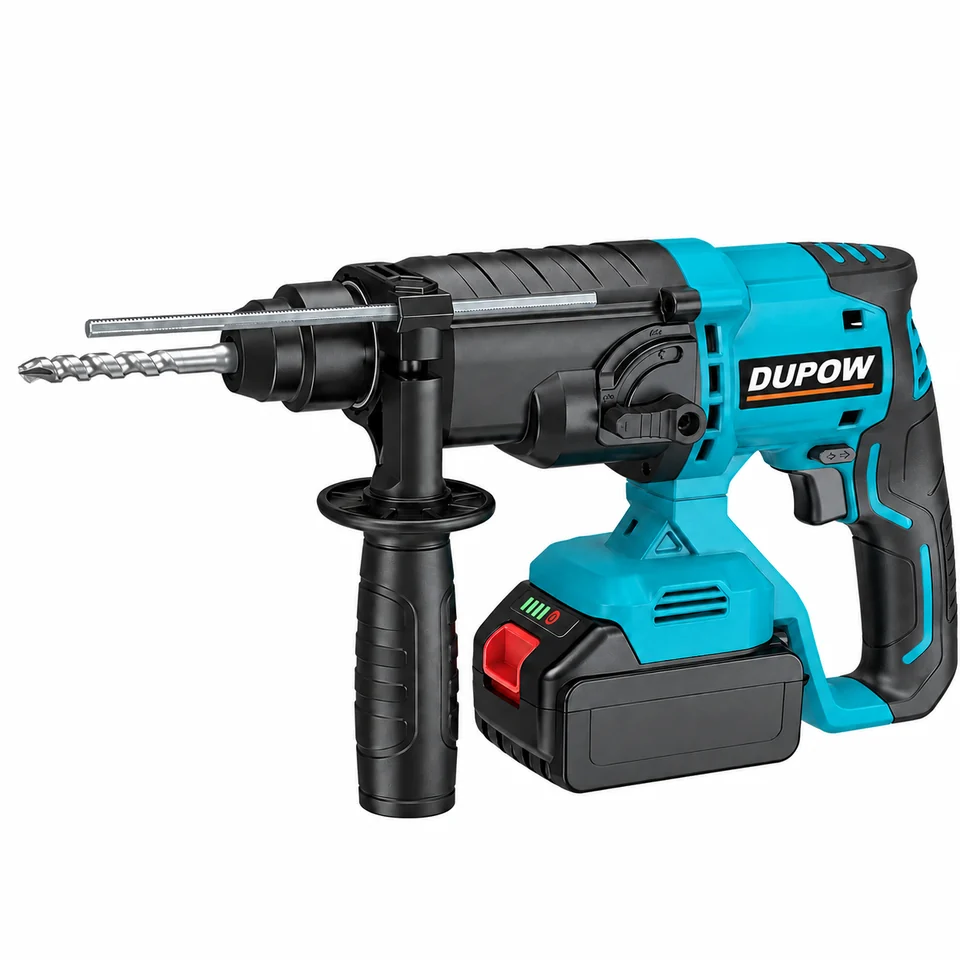
Specify the battery, charger and accessory kit
Identify the required battery reference, capacity and quantity, together with the charger version for the destination market. The 20V designation is not a complete description of the physical and electrical combination to be supplied. Keep the approved tool-and-pack arrangement with the quotation.
The 20V platform guide covers wider range planning. For each rotary-hammer SKU, make a separate contents list for the tool-only or kit offer, including the agreed handles, drill bits, carrying format and printed materials.
Use the rotary-hammer category to review the current range. Send the shortlisted models, material requirements, quantities and configuration to DUPOW so the quotation and sample approval can follow the same specification.
Buyer FAQs
Do all three models have an SDS-plus toolholder?
Yes. DUP-RH-001, DUP-RH-002 and DUP-RH-003 list SDS-plus toolholders. Keep that exact designation with the selected drill bits and accessories.
Which concrete capacities distinguish the models?
The listed maximum concrete drilling capacities are 13 mm for RH001, 20 mm for RH002 and 22 mm for RH003. Steel and wood capacities are separate entries in the comparison table.
Do the joule and bpm figures describe the same thing?
No. Joules describe the listed impact energy, while bpm describes impact rate. Keep both separate from the no-load rotational speed in rpm.
What should be included in a rotary-hammer buying brief?
Include material and hole requirements, model, quantity, toolholder and accessories, required operating modes, battery and charger configuration, destination, branding and packing.
Request a rotary-hammer model comparison with the materials and configuration your channel needs.