Choose a cordless heat gun when the job needs a self-contained power source and the approved battery configuration suits the task. Choose a corded position where the intended electrical supply and airflow profile fit the job. Compare temperature and airflow as paired settings, then verify the nozzle and kit.
| Model | Supply and temperature | Listed airflow | Quote detail |
|---|---|---|---|
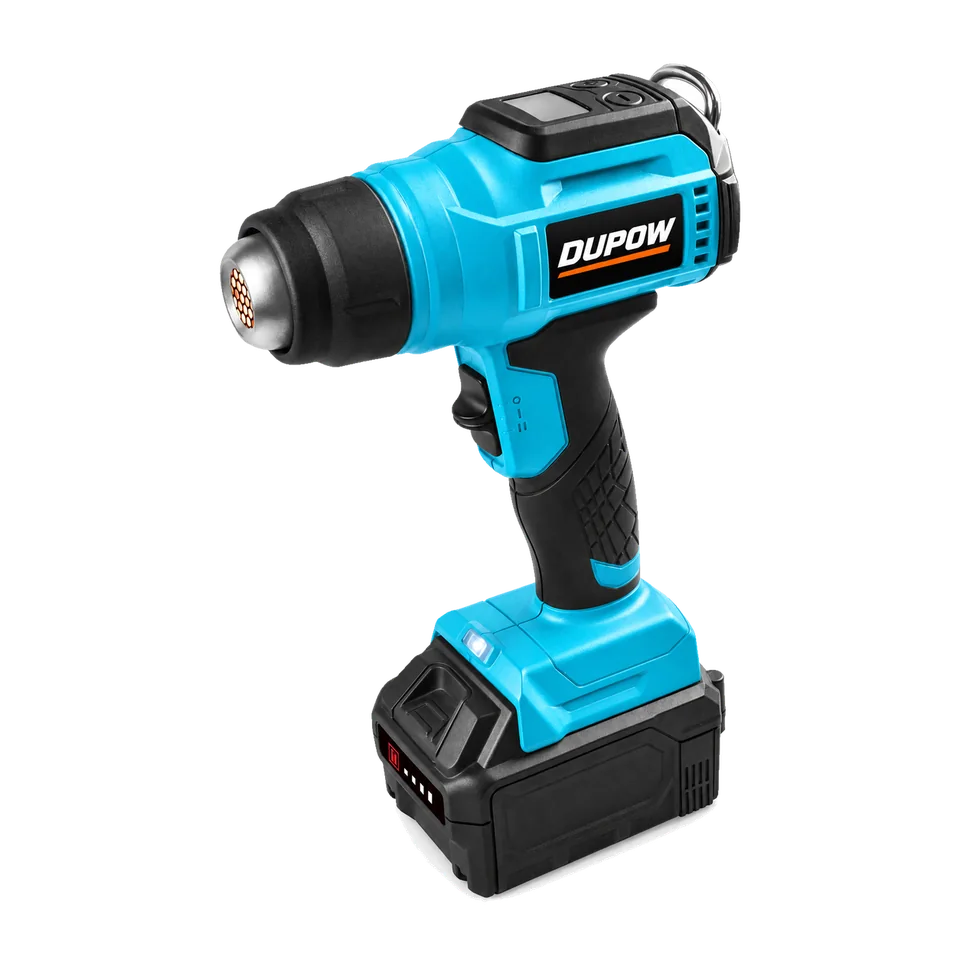
| DUP-HG-001 | 20 V; 30–400 °C or 30–550 °C | 100 or 200 L/min by stage | LCD and three listed nozzle formats; identify pack contents |
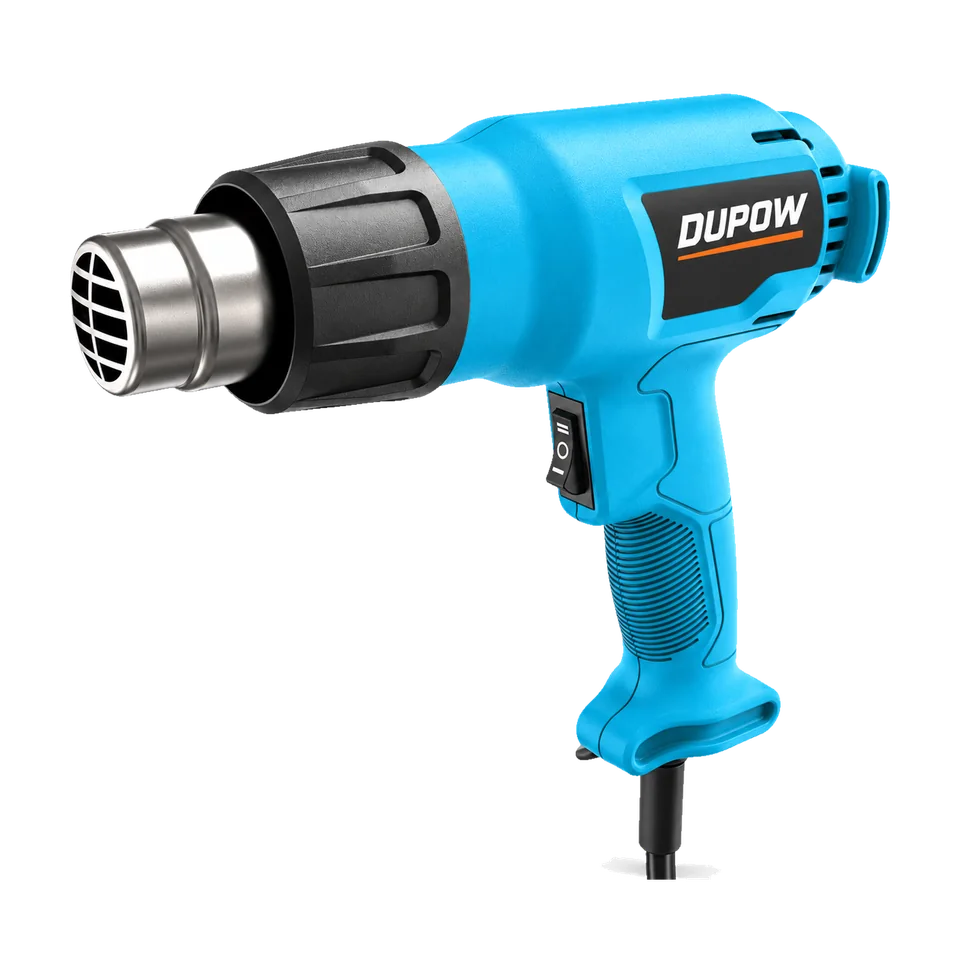
| DUP-HG-003 | 220–240 V, 50 Hz; 400 or 600 °C | 300 or 500 L/min by stage | Identify the delivered nozzle set |
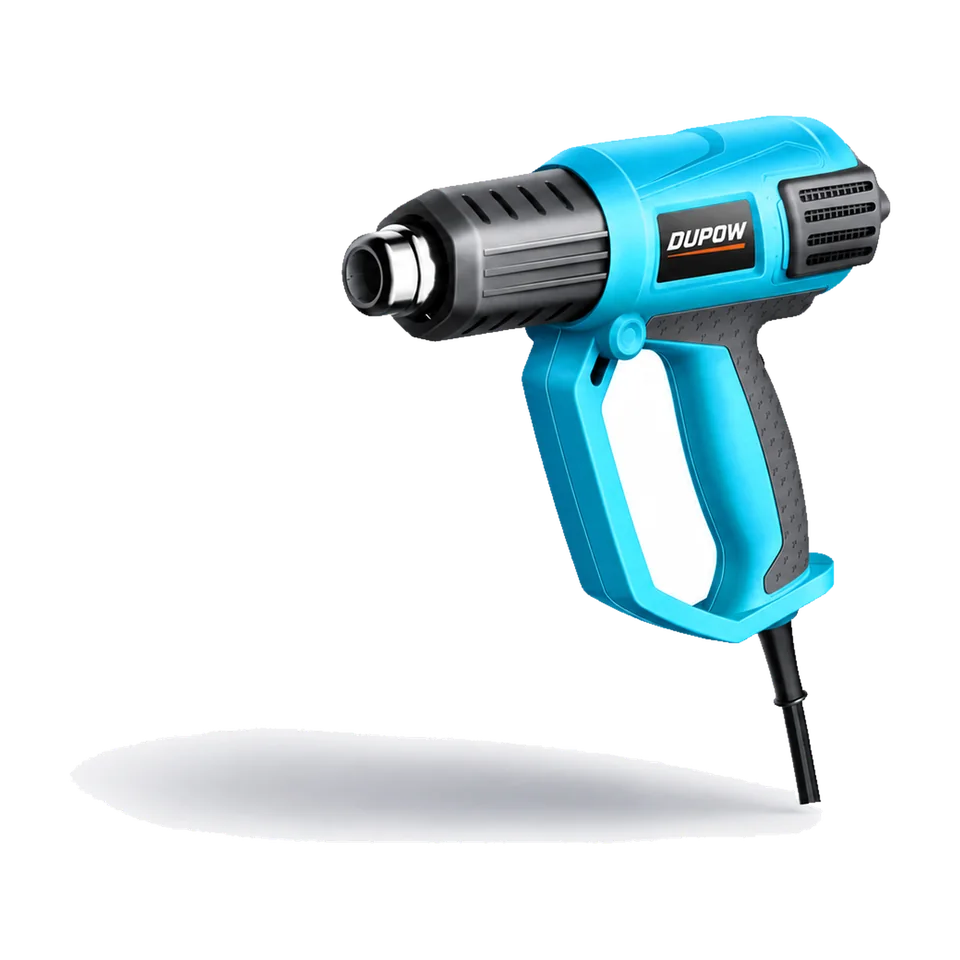
| DUP-HG-004 | 220–240 V, 50/60 Hz; 50 °C or 50–650 °C | 250–500 L/min | LCD; specify nozzle and case contents |
Define the task and configuration
Record the material, area and intended temperature setting. Ask for a trial on the representative workpiece with the correct nozzle, including the settings and the outcome. The Bosch cordless heat-gun page is a manufacturer example of specifying temperature settings, airflow and package details separately.
On the cordless line, record pack quantity, charger and relevant interface. Keep a runtime claim tied to the pack and operating conditions that support it. On the corded line, keep plug, voltage and frequency with the version quoted.
Buyer FAQs
Does a higher maximum temperature mean higher airflow?
Use the stated pair for each stage. Compare airflow separately when two tools quote similar temperatures.
How should I label the nozzle options?
List the purpose and part reference, then distinguish supplied nozzles from optional ones in the quotation.
Read the related guide on 110V vs 230V Power Tools: What Buyers Need to Confirm or request a model-specific quotation with the configuration you need.