A reciprocating saw offer needs to explain what the tool will cut, which blade is supplied and how the selected model suits the intended work. Stroke length and stroke rate belong in the comparison, but neither replaces material-specific capacity or a defined sample task.
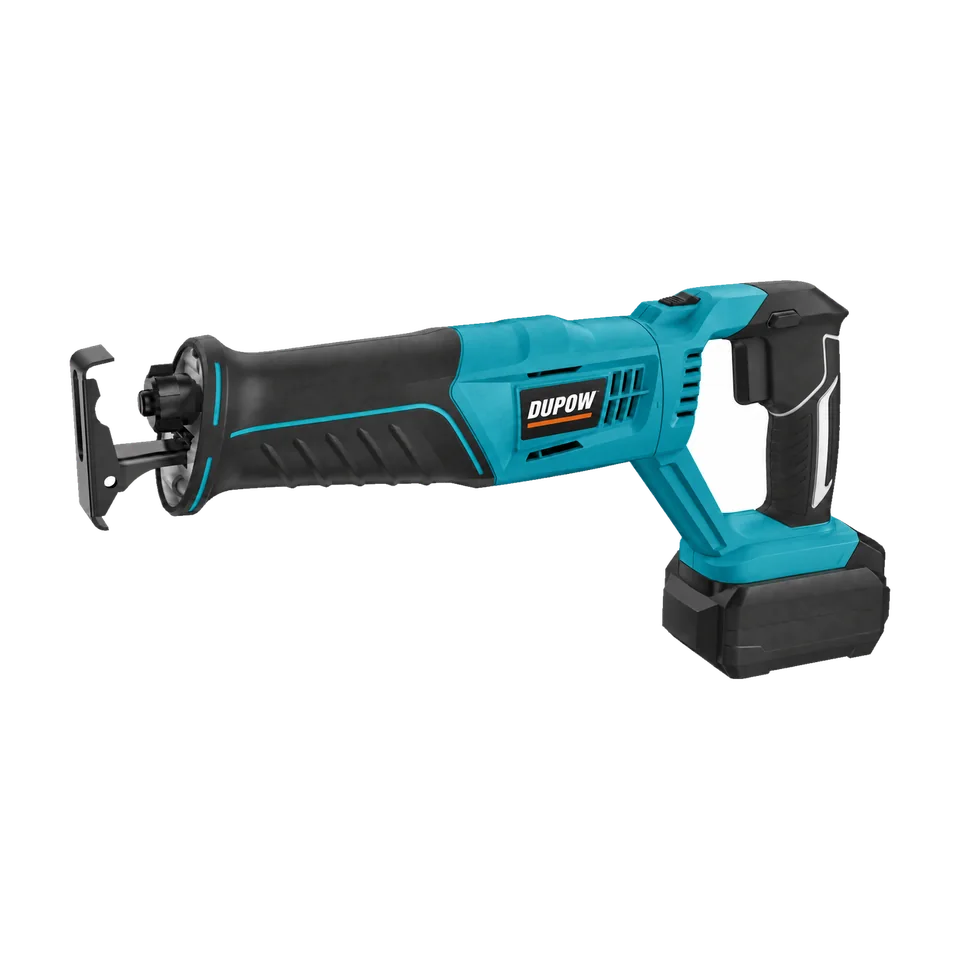
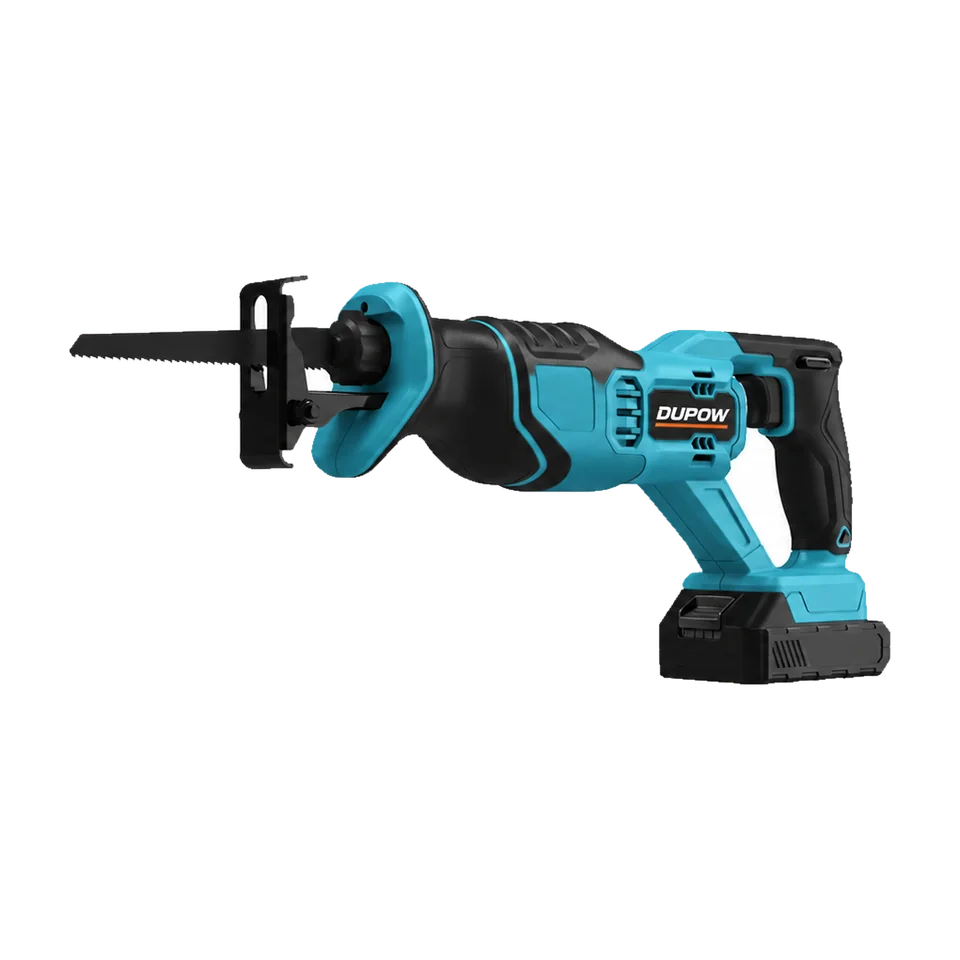
This guide compares the 20V DUPOW DUP-RS-008 and DUP-RS-009 for importers, distributors and private-label buyers. Their stroke specifications create a useful contrast: RS008 lists a 28 mm stroke and 0–2,800 spm, while RS009 lists a 20 mm stroke and 0–3,200 spm. The purchasing decision is how that combination fits the customer's job and complete order configuration.
Describe the work and the access conditions
Start the brief with the material and workpiece form. A timber section, hollow steel tube and solid steel section need different descriptions. Add the dimensions, access limitations and type of cut that matters to the customer. If the work involves mixed materials, identify them rather than treating them as a single generic demolition application.
For a distributor, this brief helps determine which model and accessory package the sales team should present. An online seller can use the same distinctions to build accurate listing fields and replacement-blade information. A private-label program should carry the agreed application description into the sample record, manual and packing approval.
Use the portable saw range guide when deciding whether a reciprocating saw, jigsaw or circular saw belongs in the range. Once the tool category is selected, compare the specific models below.
Read stroke length and stroke rate separately
Stroke length describes the reciprocating movement distance. Stroke rate describes how frequently the mechanism cycles, usually expressed in strokes per minute. Keep the units visible in the comparison so a millimetre figure is not mistaken for blade length or cutting capacity.
Bosch Professional's reciprocating-saw comparison treats stroke length, no-load stroke rate and cutting depth as distinct specifications. The same separation makes the following DUPOW comparison easier to use; the values remain specific to RS008 and RS009.
| Selection field | DUP-RS-008 | DUP-RS-009 |
|---|---|---|
| Stroke length | 28 mm | 20 mm |
| No-load stroke rate | 0–2,800 spm | 0–3,200 spm |
| Maximum wood capacity | 115 mm | 110 mm |
| Maximum hollow steel-tube capacity | 60 mm | 60 mm |
| Maximum steel capacity | 6 mm | 6 mm |
RS008 has the longer listed stroke; RS009 has the higher listed maximum no-load stroke rate. Those two facts do not, on their own, establish which saw completes a particular task faster. Blade design, material, battery configuration and the working setup belong in that assessment. Give the sample team the same task and record the complete setup beside each result.
Keep hollow-tube and solid-material entries distinct
The 60 mm hollow steel-tube entry and the 6 mm steel entry describe different workpiece forms. Keep the word “hollow” in the tube specification wherever that value appears. It should not become a claim that the saw cuts a 60 mm solid steel section.
Apply the same care to the wood entries: 115 mm for RS008 and 110 mm for RS009. Use the material-specific capacity to form the shortlist, then define the intended cut and blade in the sample request. This makes capacity information useful without promising the same result for every workpiece condition or accessory.
For a purchasing comparison, a short material schedule is often enough: material name, workpiece form, dimensions, requested cut and blade reference. Keep each sample result next to that schedule. Your sales team can then describe the reviewed application precisely when explaining the range to customers.
Build the blade package around the application
Specify the blade reference, mounting interface, intended material, length, tooth design and quantity. The blade must suit both the saw and the workpiece through the stroke. A nominal blade length alone is insufficient to identify the correct accessory or define cutting performance.
Bosch Professional's metal-cutting blade guide explains why the metal type and required cut matter when selecting an accessory. Use that principle when defining your own blade request. A blade intended for one material should not be described as suitable for every metal or mixed-material task without the matching accessory information.
Quote replacement blades separately when they are intended as service stock. If they are packed with each tool, state the quantity and blade identity in the retail contents list. Both models list tool-free blade changing and an LED work light; RS008 also lists a rotating rear handle. Keep that handling feature with RS008 when preparing model photographs and descriptions.
Review handling with the intended kit
Ask the sample team to inspect the tool and blade arrangement against the quotation, then assess the agreed task using the selected battery. For RS008, include the rear-handle adjustment in the review. For both models, assess the controls and working arrangement using the model's instructions rather than applying another manufacturer's operating procedure.
Separate a model's specification from a demonstrated result. A no-load speed range is a technical field. A task result needs the material, blade, battery and conditions recorded. Keeping these together gives a private-label buyer useful evidence for approving an application description and helps a distributor respond to customer questions after delivery.
Make the order configuration explicit
Prepare one contents list for each retail SKU: saw model, selected blade and any additional blades, battery reference and quantity, charger version, accessories and package. Bare-tool and complete-kit quotations should describe their included items clearly. Product photographs and online listings should match the selected package.
For a multi-tool program, use the 20V platform planning guide to organize specific tool, battery and charger combinations. The reciprocating-saw category provides the current model range. Add destination market, order quantities, branding and manual languages to the RFQ brief so the quotation and sample request describe the same offer.
Buyer FAQs
Is a 28 mm stroke the maximum cutting depth?
No. Stroke length describes the mechanism's movement distance. RS008 separately lists maximum capacities of 115 mm in wood, 60 mm in hollow steel tube and 6 mm in steel.
Does RS009's higher no-load rate guarantee a faster cut?
No. Compare the selected material, blade, battery and setup in a defined sample task. RS009's 0–3,200 spm range is a specification, not a task-specific cutting result.
Does the 60 mm tube entry apply to solid steel?
No. Both models' 60 mm entries refer to hollow steel tube. Their separate listed steel capacity is 6 mm. Retain those workpiece descriptions in the product comparison.
What should a reciprocating-saw buyer include in an RFQ?
Send the model and quantity, material and workpiece dimensions, intended cut, blade package, battery and charger requirements, destination, branding and packing. Identify any replacement blades required as service stock.
Request a reciprocating-saw shortlist with the materials and kit format your customers need.