A cordless jigsaw comparison becomes useful when it connects the material, required cut and blade to the actual model specification. A headline wood-cutting capacity is a starting point. Stroke length, speed range, blade changing and the selected accessories complete the purchasing picture.
DUPOW's 20V DUP-JS-028 and DUP-JS-029 offer two model positions for importers, distributors, private-label brands and online sellers. This guide explains their listed differences and shows how to turn them into a clear sample brief and retail offer without assigning one material's capacity to another.
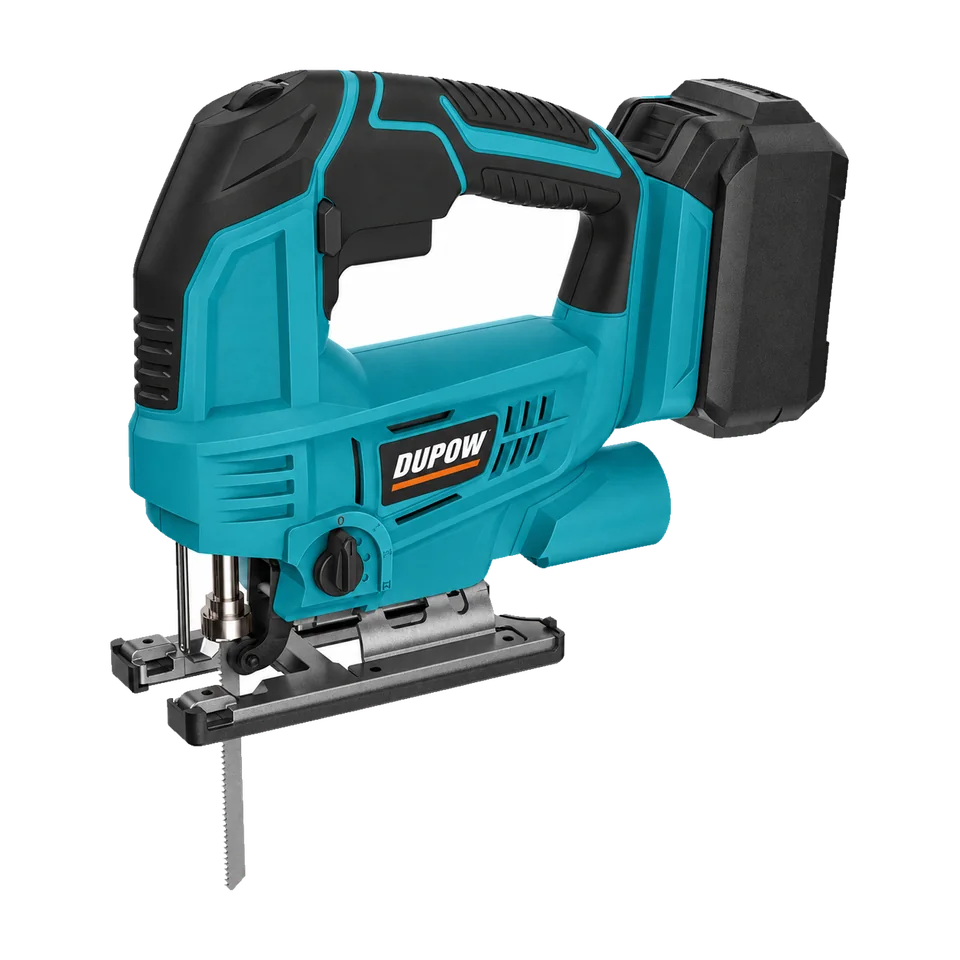
Identify the cut before choosing the range
Write down whether the customer needs straight cuts, curved shapes or bevel work, then identify the material and thickness. Include the finish that matters to the customer. Rough sizing and a visible finished edge are different sample-review tasks even when the same tool category is appropriate.
For a distributor, a model comparison can help sales staff explain why two products belong in the range. For an ecommerce seller, the same information supports clear listing fields. A private-label buyer also needs the product, manual and package to describe the same intended work. Start with a small set of defined tasks rather than a long list of unsupported applications.
Our portable saw range guide explains the broader role of jigsaws alongside circular and reciprocating saws. Here the decision is which cordless jigsaw specification fits the selected position.
Keep material capacities in separate fields
JS028 lists a maximum cutting capacity of 100 mm in wood and 6 mm in steel. JS029 lists 80 mm in wood, 80 mm in plastic and 6 mm in steel. Those entries should retain their material labels wherever they appear in a comparison, package brief or sales listing.
| Selection field | DUP-JS-028 | DUP-JS-029 |
|---|---|---|
| Maximum wood capacity | 100 mm | 80 mm |
| Maximum steel capacity | 6 mm | 6 mm |
| Stroke length | 21 mm | 19 mm |
| No-load stroke rate | 0–3,000 spm | 800–3,000 spm |
| Bevel range | −45° to +45° | −45° to +45° |
The shared steel-capacity figure does not make the models identical. Their listed wood capacities, stroke lengths and speed ranges give buyers specific differences to evaluate. Likewise, JS029's plastic entry should remain with JS029; it does not establish an unlisted plastic capacity for JS028.
Use the maximum-capacity figures to form the shortlist, then assess the intended material and finish with an appropriate blade. Keep the sample setup and result with the model record. This helps the buying team explain its choice using a repeatable task rather than a single headline number.
Choose blades for material and cut shape
A blade pack needs a more useful description than “jigsaw blades included.” Identify the mounting interface, blade reference, intended material, usable cutting length and cut style. A blade chosen for a narrow curve serves a different purpose from one selected for a straight cut through thicker stock.
Bosch DIY's jigsaw-blade selection guide explains how material, blade width and tooth design affect blade selection. Its general selection principles help structure the accessory request. Use the actual DUPOW model and matching blade specification when ordering; another brand's changing mechanism or compatibility claim does not define these tools.
For metal work, identify the metal and its thickness rather than relying on a generic “for metal” label. Bosch Professional's metal-cutting accessory guide also organizes selection around the metal and the required cut. Link the chosen accessory to the task your sample team will review.
Both DUPOW models list a wood-cutting blade, hex key and guide rule as standard accessories. Additional material-specific blades can be itemized separately. This gives a distributor a clear service-stock list and an online seller an accurate included-items description.
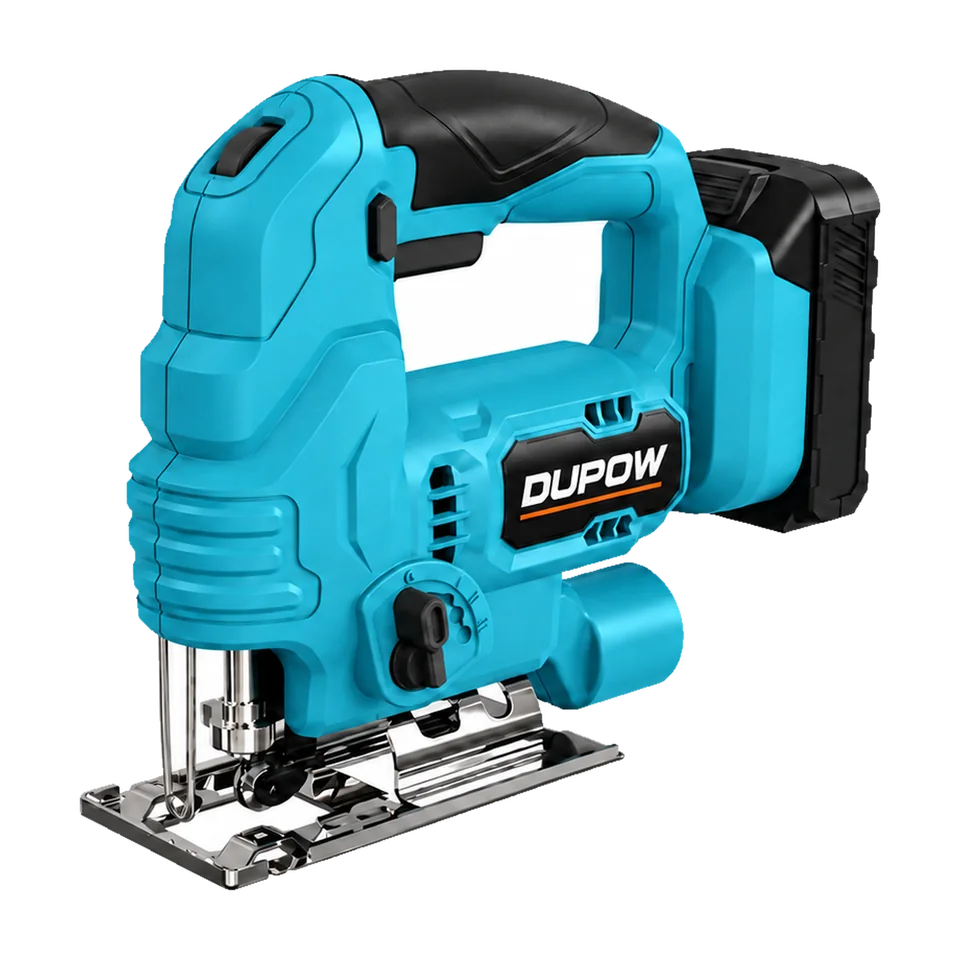
Compare controls through the actual sample
Both models list tool-free blade changing. JS028 additionally lists orbital or pendulum action, an integrated LED work light and a dust-extraction connection. These are useful points for the JS028 sample review and product presentation. Do not apply that feature list to JS029 simply because the tools share the same voltage label.
Ask the sample team to assess blade installation, the selected working settings, base adjustment and handling with the intended battery. Where a dust connection matters to the selling position, identify the adapter and extraction arrangement in the review brief. A connection on the tool does not, by itself, specify every accessory needed for a working setup.
Write the approved feature sheet after the sample configuration is settled. Include photographs that show the actual model and accessories being offered. For bevel work, retain the specified angle range and assess the required cut with the selected blade and material; the angle range alone does not establish identical finish or capacity at every setting.
Turn the shortlist into an orderable package
Create a separate line for each model and kit. Identify the tool, blade quantity and reference, battery model and quantity, charger version and package. A bare tool and a complete starter kit need distinct contents lists, even if the product photograph uses the same saw body.
When building a wider cordless assortment, use the 20V platform guide to organize specific tool, pack and charger combinations. Browse the jigsaw category for the current model range. A common voltage marking is insufficient to establish universal battery compatibility.
Private-label buyers should add logo artwork, marking positions, manual languages and packing requirements to the same approval record. The private-label packaging checklist covers that process in detail. Keep carton and shipping weights separate from the tool's technical comparison, and ask for the final packed-kit figures when ordering battery-inclusive retail sets.
Buyer FAQs
Is the 100 mm figure a capacity for every material?
No. JS028's 100 mm entry refers to wood. Its listed steel capacity is 6 mm. Always retain the material label with a maximum cutting-capacity figure.
How do JS028 and JS029 differ in stroke specification?
JS028 lists a 21 mm stroke and 0–3,000 spm no-load range. JS029 lists a 19 mm stroke and 800–3,000 spm. Use the selected blade and material to assess the intended task.
Which model lists orbital action and a dust connection?
JS028 lists orbital or pendulum action, an LED work light and a dust-extraction connection. Both models list tool-free blade changing. Keep the additional JS028 features tied to that model.
What information makes a jigsaw RFQ useful?
Send the model, quantity, target materials and cut requirements, blade package, battery and charger choices, destination, branding and packing. Include the sample configuration you want evaluated.
Request a cordless jigsaw quotation with your material, cutting and retail-package requirements.